An industry punching below its weight?
Governments and industry work together to find ways to crowd in more private capital into sustainable climate mitigation

The United Nations climate change negotiations taking place in the Amazon this month are likely to be difficult. Regardless of the outcome, the insurance industry may need to sharpen its focus on how it responds on climate change
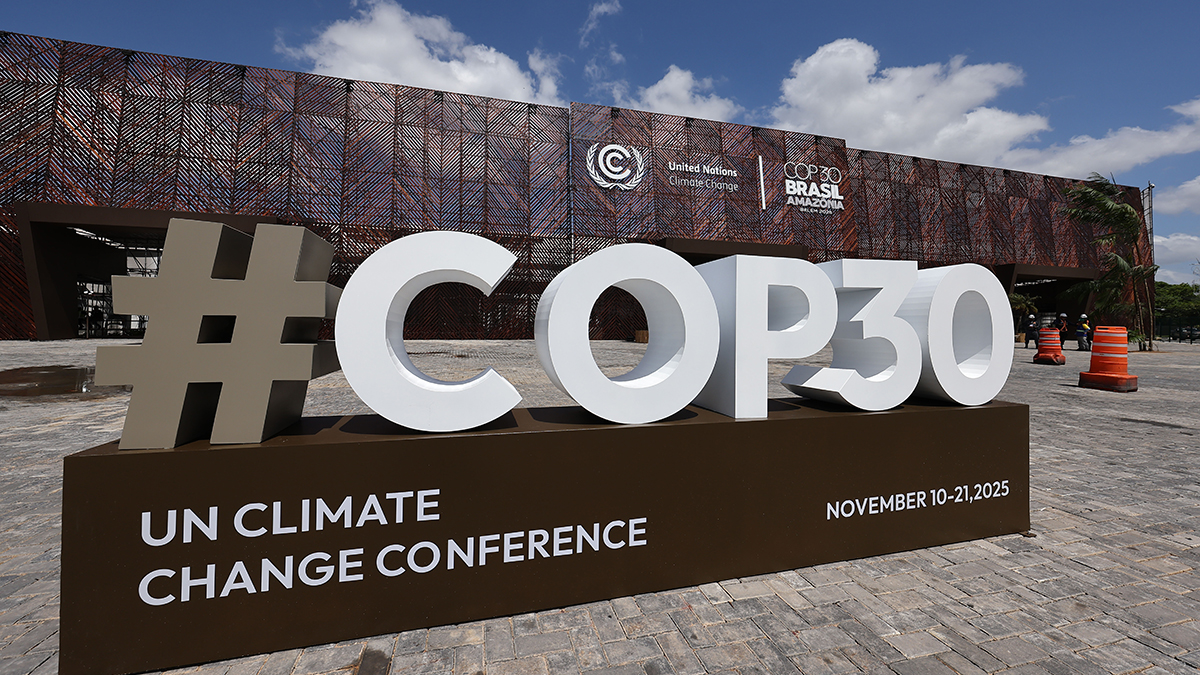
As COP30 climate negotiations open in the Amazon city of Belém this month, it may be easy to focus on what could go wrong. An openly hostile US administration has recently sunk an international agreement on shipping emissions; multiple open conflicts around the world are taking up many key governments’ attention and financial resources; there is considerable backsliding on previous business sector commitments on climate change.
But can governments and businesses really afford this?
The risks to the insurance and reinsurance industry have been known for decades. As far back as the 1990s, Munich Re and Swiss Re published landmark reports on what unabated climate change could mean for the industry. Jeremy Leggett, an oil and gas geologist turned campaigner and then green transition entrepreneur – he is now chief executive of Highlands Rewilding – recalls how he was invited back then to meetings at Lloyd’s of London to discuss what the industry should do, in its own interest. Leggett mentions early leaders in the sector: the then President of the Reinsurance Association of America, Franklyn Nutter, who he calls a “brave man” for facing “concerted and unashamed” pushback from the fossil fuel industry in Washington DC; and General Accident’s Andrew Dlugolecki, who “foresaw a point of no return where wealth would be destroyed by climate disasters faster than it could be created”.
“But in the 30 years that followed, with global average temperatures rising all the time, and despite the profitable risk abatement opportunities that have arisen along the way, the industry’s collective effort to protect its own interests has been dismal,” Leggett tells Insurance Day.
According to Swiss Re Institute analysis issued this year, in the 10 years since the Paris Agreement on climate change of 2015, insured losses from natural catastrophes have nearly doubled. They have jumped from $77bn (adjusted to 2024 price terms) in 2015 to $145bn in 2024. The current annual rate of increase of 7% is equivalent to a doubling every decade, so average annual losses could amount to $270bn by 2035. This is assuming they don’t accelerate even further, given global governmental climate pledges are still far off track to meet the goals of the Paris Agreement, leaving the world on track for a catastrophic 2.3°C to 2.5°C of warming above pre-industrial temperatures.
The picture is not entirely bleak. Thanks to the Paris Agreement the planet is now projected to warm less than would have been the case without it – beyond 4°C. Renewables and energy efficiency are advancing, and the costs of solar power and batteries have fallen by up to 90%. Investments in clean energy are now around $2trn a year, twice those into fossil fuels.
The specific and critical role of the insurance industry to proactively enable the objectives of the Paris Agreement is firmly on the agenda. It is good to see how the industry has stepped up the visibility of its presence at climate negotiations, setting up a dedicated insurance pavilion “Casa do Seguro” at COP30, which will livestream events.
The insurers’ dilemma
According to analysis by insurance broker Howden, the current regulatory landscape of the insurance sector has created structural issues that undermine how it deals with climate risks. This leads to structural inertia, which in turn means financial players continue going down a business-as-usual route, as if climate change wasn’t happening, leading to environmental destruction.
Neither insurers nor the insured are sufficiently incentivised to consider longer-term insurability and therefore to model longer-term forward price curves for climate risk, in a comparable way to what happens for most commodities, fossil fuels and critical services.
To turn things around, Howden recommends governments and industry work together to find ways to crowd in more private capital into sustainable climate mitigation by adopting de-risking solutions with the potential to reduce the overall cost of capital. They should accelerate and scale transition spending by ensuring resilient development and adaptation actions, informed by financially quantified current and future climate risk modelling.
Speaking to Insurance Day, Michael Jacobs, professor of political economy at the University of Sheffield, also points to the importance of International Monetary Fund and World Bank annual meetings in Washington DC last October, where the Brazilian government launched a report of the “Circle of Finance Ministers” as part of its COP30 presidency, which Jacobs dubs “the new bible of climate finance”.
Not all countries involved have endorsed the final report, stating that it includes non-consensual views. Yet, crucially, China unexpectedly gave its full support. The involvement of finance ministries has also marked an important shift for issues which normally would be delegated to environmental officers in respective governments.
Jacobs says “as the opportunities and expectations of private sector investment in climate – particularly on the resilience side – are increased, then the role of insurers as investors […] will become particularly interesting.”
Among initiatives to be discussed at COP30, the Inter-American Development Bank Group (IDB Group)’s initiative ReInvest+ aims to bridge global financial markets with the transformative adaptation and mitigation projects urgently needed in developing countries, where private capital flows to tackle climate change remain slow.
Global investors favour rated, hard-currency securities, while the projects most in need are early-stage, unrated, and often in local currency. “Until now, we have asked institutional investors to change their risk appetite to invest in projects in developing countries,” IDB group president, Ilan Goldfajn, said in a statement. “That approach has proven too costly and unscalable. With ReInvest+, we are flipping the script,” Goldfajn said, adding: “The projects must go where the money is.”
Ultimately, whether one argues that the insurance industry needs to do more, or whether one believes governments need to give better (and less contradictory) political and regulatory signals to markets, one thing is clear: a sharper focus on the role of insurance is needed. COP30, with an insurance pavilion in the middle of the endangered Amazon forest as a backdrop, might be the right place for the industry to finally stop punching below its weight.
Germana Canzi is a freelance journalist