When less means more in the London market: TMK’s Syal
Lloyd’s carrier’s CUO describes the advantage of being both an open and delegated underwriting organisation

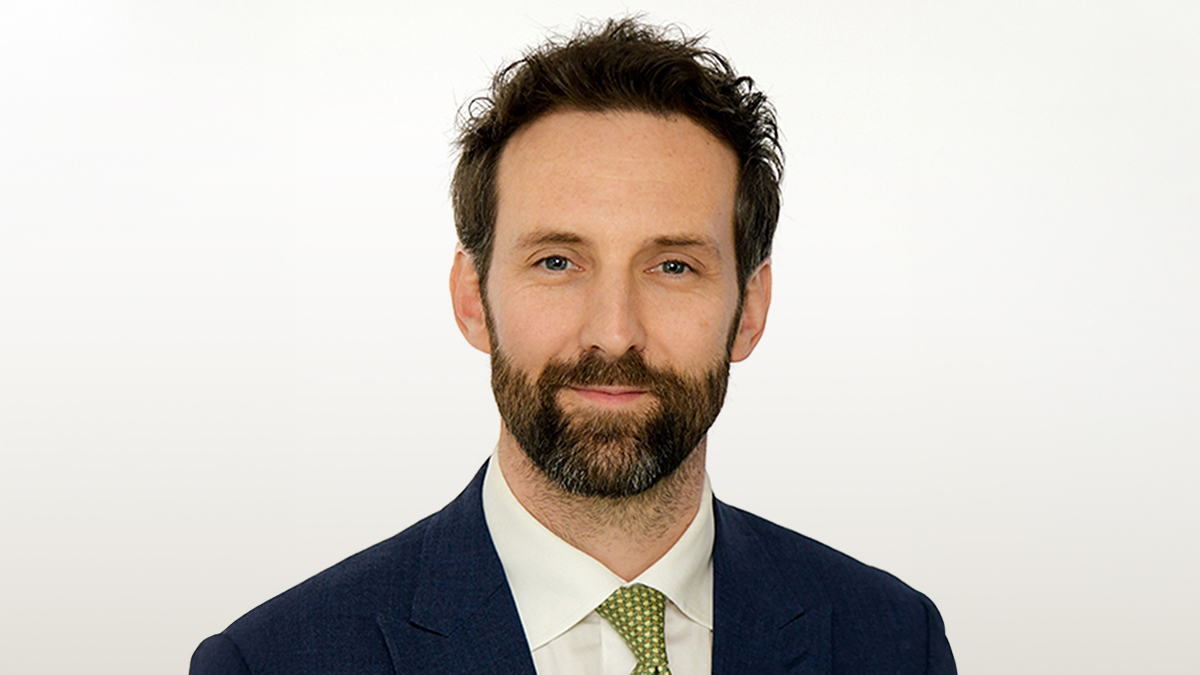
‘The market will move towards fewer, more skilled market leaders,’ TMK’s chief underwriting officer, Vivek Syal, says
Attrition and acquisition will create a leaner London market, with fewer but stronger leaders, according to the chief underwriting officer (CUO) of Tokio Marine Kiln (TMK), Vivek Syal.
In an interview with Insurance Day, Syal describes TMK as such a leader, not least because of the global weight of its parent company, Tokio Marine Group.
“We’re a large open market underwriting organisation and we’re also a large delegated underwriting organisation, which goes right the way back to our inception,” Syal says.
TMK is unique, he continues, because it can access business all around the world by tapping into local expertise and also work with its sister companies in a large group. “It’s very hard to compete with that and it gives us such huge compelling advantages that you can expect to see even more from us in the future,” he adds.
Syal became CUO of TMK in April 2024 after spending more than six years as its chief risk officer (CRO). Before that he spent more than a year as CRO at ProSight Specialty Insurance. Seeing the upside and not only the downside of risk is the art of an effective CRO, he stresses. And moving from CRO to CUO is less about titles and more about capabilities, he adds.
“Insurance is the best industry in the world because it touches all aspects of society and all aspects of business. The world’s issues are our issues and our solutions are the world’s solutions”
Vivek Syal
Tokio Marine Kiln
“There’s oftentimes a risk in not being able to leverage the upside and so the CRO role has been quite pivotal for me, as it has given me the grounding necessary to have a balanced perspective, to see the opportunities within the risks we’re insuring,” Syal says, adding a failure to maximise risk appetite is itself a risk.
The transition from CRO to CUO might not be a typical path, he admits, but stresses there is no reason why it should be quite rare because the “strategic lens” of a CRO is key.
Significant emerging risks to insurers include a failure to leverage technology to enhance underwriting, a failure to manage the instability climate change is creating for insureds and a failure to keep pace with the evolution of cyber.
Syal says: “This requires us to be thinking as a lead market around coverage and the sorts of offering we can bring to our clients, not only to protect them against the downsides but also to allow them to grow their own businesses by providing the security and certainty of coverage at a time of tremendous uncertainty.”
These “tailwinds” are putting additional pressure on risk managers and, as a former CRO, Syal is naturally sympathetic. A client from a large global company TMK insures recently told Syal it can feel a bit lonely as a risk manager in a big organisation when they are facing all these tailwinds. He can reassure them of the benefit, not only from having an insurance partner that has been around for more than 60 years and is part of a group with 146 years of experience, but also from knowing they plan to continue for as many, if not more, years to come.
He says: “That longevity means we’re able to give unique support, guidance and service because we’re not thinking in one-year time horizons. Moreover, we’re able to broaden their view, like opening up our window, so they see beyond a particular product within a particular segment, to all the additional insurance coverages we have. All of a sudden, we become a much broader prospect for them.”
LMA newbie
Born and bred in Newcastle, but a resident of London for more than 20 years now, Syal had expected to follow his family’s tradition of becoming an entrepreneur. Another ambition was to become a professional cricketer, for which Durham was a stomping ground in his youth. Nevertheless, embarking on a career in insurance was deliberate, proved by the fact he graduated in actuarial science (from Cass Business School). Before TMK, he held various senior positions at ProSight, the Bank of England and PwC among others.
As well as being CUO at TMK, Syal has been a board member of the Lloyd’s Market Association (LMA) since November last year. “I’m still the newbie on the LMA board and I probably come at things from a slightly different perspective and not only because of the move from CRO to CUO,” he says. “I come from a family that set up businesses and sold businesses and I’ve also worked in many different types of organisations and seen a lot of different things, be that within Lloyd’s or the wider general insurance market, including life insurance, and in private equity as well.”
That broad perspective meant Syal was a “strategic CRO” and created a strategy team at TMK. “There’s a wealth of experience on the LMA board but coming at Lloyd’s transition from a slightly different perspective is helpful, I hope, because the world is always changing and the risks are constantly evolving,” he says. “Insurance is the best industry in the world because it touches all aspects of society and all aspects of business. The world’s issues are our issues and our solutions are the world’s solutions,” he adds.
Part of that strategic thinking also includes casting a wide net for new talent. “I recently met the latest intake of underwriting graduates TMK has recruited as apprentices,” Syal says, “and the energy and perspectives they bring are amazing.”
He continues: “If people fell into insurance then I’m glad they did, because they have a huge amount of experience we can all learn from. And whether it’s deliberate or not is by the by because what matters is that having a thriving industry with unbelievable talent is something we should not take for granted and must continue to harness. If we do that then our industry is in very capable hands for many years to come.”
Emerging risks, moreover, require expertise from outside the sector. “If you’re working as a geologist or a climatologist or in sustainability or in modelling, you know of different perils and there is a pathway into our industry for those skills,” Syal says. “That’s equally true if you’re working for MI5 or as an aeronautical engineer and so on. It helps us think about things differently, which is essential for a growing insurance landscape.”
TMK’s strategy stands on four pillars: building business; surfacing insights; enabling underwriting; and engaging our people. The fourth pillar is about developing a growth mindset across the whole organisation, Syal says, so everyone “feels connected to the strategy”. He says: “If I’m talking about property cover, for example, it might not be obvious if you’re in the IT team how that’s connected to you, but there’s a lot of untapped potential in every organisation and engaging our people is one of our values because teamwork is at the very heart of what we do.”
Above all, he stresses, culture is TMK’s “secret weapon”.
“We’ve won underwriting and claims awards, but those teams don’t do the best they can without the whole of the organisation working in a unified, structured and targeted way. That’s our secret weapon. I don’t think you ever perfect it, but you must strive to,” he says.
Syal also highlights the role of a chief operating officer (COO). “As a marketplace, as an industry and as a society, we’re all talking about technology because it’s evolving very quickly. And I think the role of the COO is critically important in many respects to enable that evolution,” Syal says.
Advocate of Lloyd’s
Syal says TMK “breathes” the Lloyd’s market and is very much a lead Lloyd’s vehicle, a responsibility it takes “extraordinarily seriously”.
TMK merged its Lloyd’s syndicates 510 and 1880 in January this year into a single syndicate with a capacity of £2.225bn ($2.99bn). From 2021 to 2024, the two syndicates wrote all lines of business on an 80/20 quota-share basis, with 510 taking the larger share. These lines are now written 100% by 510.
The fact risk managers, insurance carriers, brokers and lawyers are all based within the same square mile around Lloyd’s endures as the London market’s main strength, he says. The combined strength of TMK and Tokio Marine Group’s brands “go a long, long way”, he adds. The group’s market cap exceeds $60bn, placing it among the “real global insurance forces”, Syal says, adding that serving clients well is not only about strength but also about humility.
Part of that humility lies in communicating how Lloyd’s itself could be attracting even more business than it does at present. “We’re having conversations with prospective clients who weren’t fully aware of what TMK or Lloyd’s could offer them. As an advocate of the London market, either through TMK or through my role at the LMA, I see many opportunities for Lloyd’s to continue to grow and thrive, but we take absolutely nothing for granted,” Syal says.
Syal describes a “bifurcation” in the London market, between the carriers that lead and those that follow. TMK owes its position as one of the leaders to being both a delegated and open market business. “We have the best of both worlds,” he says. The role of market leaders will become even more pronounced and important in the coming years, he adds, with brokers needing to have “significant efficiency to fill the rest of the slip”.
“We’re already seeing, through the enhanced underwriting world, somewhat of a bifurcation between those who are the recognised true leaders and those who aren’t. And I think we’ll have fewer, bigger leaders in the future,” he says.
A measure of leadership will be “process efficiency”, Syal continues, largely from the effective adoption of new technology. “Access to information, ingestion of information, organising that information and providing your line on a particular placement – and doing all that at speed,” he says. “Gone will be the era in certain classes where you can take days, weeks or months to fill placements for clients.”
Codifying risk
This ability will not rely entirely on technology but will also depend on how clearly a carrier “codifies” its risk appetite. “Being really clear about what it is you want to do as a company, versus the things that maybe you don’t want to do, will matter even more as data and technology come to play a huge role in changing the efficiency level of our industry,” he says.
Syal outlines what codifying appetite means in practice. “When a submission comes in, a workbench ingests that information to automatically triage it. That means deciding whether it is, for you, a ’slam dunk’ for which you will provide a quote, or it’s something that requires intervention and review or it’s outside your appetite. The ability to do that at pace, using data according to how you define your appetite, that will be super-important.”
Used correctly, technology serves to “amplify” underwriting expertise and enhance risk selection, Syal says, adding this will emerge as a key attribute as the London market moves towards having fewer, more skilled market leaders. The Lloyd’s market must “run towards technology,” he stresses, “execute on diverse skill sets and advertise its brilliance for future generations”.
As for TMK’s strength as a market leader, Syal says: “We’re agnostic about how we distribute risk, either on the open market or through the delegated or portfolio route, so long as we believe it creates a return. This enables us to deliver the best solutions for our clients, but also for our investors and capital providers.”
Picking up on his earlier point that a CRO must look for the upsides of risk and not only identify the downsides, Syal highlights Tokio Marine GX, which officially launched last month.
TMGX is a unified platform for green transition insurance, enabling businesses across different industries to access specialised coverage and innovative solutions that “drive and accelerate” the transition to a sustainable, low-carbon economy. The approach consolidates expertise from throughout the Tokio Marine Group into a single point of contact for clients.
“This really leverages the skill sets within the group to provide climate transition insurance coverage to businesses across a whole spectrum of risk,” he says. “Yes, climate is a risk, but it creates new strands of opportunity because new industries will start to cultivate, and we are helping to bring them to life.”
He also highlights TMK’s Life Sciences IntelliMed Insurance product as a response to the “upside” of risk. The product reflects how life sciences risks can come in many forms, ranging from skincare products to permanently implantable medical devices and all the way through to sophisticated robots used in surgery. TMK says in an increasingly litigious world, the liability exposure can be significant.
Market conditions
The opportunities and challenges facing Lloyd’s are often seen in the context of the rate environment and the direction of travel of a hard market appears to be decelerating.
“The property market in particular and, to an extent, the casualty market are slowing in terms of rates and we’re about to go through a period where discipline will be very important,” Syal says. “We’re not done with this year yet, and there are definitely no guarantees but from listening particularly to the reinsurers at the Rendez-Vous de Septembre in Monte Carlo, you can see rates will start to fall away,” he adds.
“Disciplined underwriting and not chasing top line speak to the importance of longevity. Short-termism can allow for discipline to start to slide, but our plan is to be around for the long term. We’ll always be guided by our bottom-line objectives and our return on capital targets, which means we’re not going to be chasing things for the sake of it. But equally, we think there’s still a lot of upside potential in our markets today,” Syal says.
A symptom of short-termism is describing the market in terms of cycles rather than conditions.
“There’s a lot more sophistication than simply ’cycles’ because there’s diversification between markets and also within each one,” Syal says. “We’ve been working hard on the different attributes of our cycle management strategy, and discipline really has to come to the fore and it’s where the market leaders will stand up.”
Asked what the difference is between discipline in a hard and a soft market, Syal says it is a matter of how “realistic” a carrier is about its growth ambition.
“You can get a little carried away if you start chasing business you don’t think hits your hurdle rate,” he says. Something that does hit TMK’s hurdle rate, he adds, is managing general agents with “owner-operate” business models.
TMK held a conference for its coverholders in Canada recently, where it has long-standing relationships. “The partnership structure is an important part of our ongoing plans, particularly in that territory, but it’s getting more competitive domestically,” Syal says. “And so, we have to be resolute and stand behind them. And that’s why being a lead market today is so essential because it means you not only get to retain your discipline, but to set the discipline, too.”
The number of leading carriers will fall in the coming years, via collapse, consolidation or acquisition. “If you did it well today, it doesn’t mean you’ll do it well tomorrow. So having a quiet confidence to grow, both yourself and your business, is what makes leaders and drives leadership,” Syal says.
TMK and Tokio Marine Group are acquisitive companies, Syal stresses. “Our strategy is the compass we follow for what we want to be, over and above where we are today,” he says. “That continuous drive to excel means we will always look for potential partnerships through the acquisition route, if we believe it adds to our franchise value. We generally prefer bolt-on targets rather than huge-ticket acquisitions, unless there is a clear long-term benefit,” he says.
Internal investment
TMK has 16 product lines and is particularly market-leading in property, liability and aviation and increasingly so in enterprise risks, cyber and intellectual property, Syal says. It established a new reinsurance division in March this year, which he says will be focused on developing leading capabilities in specialty lines.
More recently, TMK launched its “enhanced” Cyber Ctrl product suite, which Syal says will underpin the company’s broader risk appetite across cyber and technology, media and errors and omissions, as it seeks to bring new premium into Lloyd’s and cement its status as a lead market.
Syal also highlights the recent arrival of a new chief executive at TMK’s US-based specialty property/casualty underwriting agency, Tokio Marine Highland, Steve Prymas, and the imminent arrival of the head of special risks this autumn, James Wilson.
Syal’s role as CRO and then CUO, “in many ways, stays the same”, and it is clear titles alone mean little to him. “There’s no compromise on hard work, on having the drive to make today better than yesterday and tomorrow better than today. And there’s no compromise in constantly looking at the needs of our clients,” he says.
“At the same time,” he continues, “there’s no denying data- and analytics-led decisions and giving underwriters the information they need to make the best possible decisions means we’re moving at a completely different pace now. Being comfortable with that is critically important.”