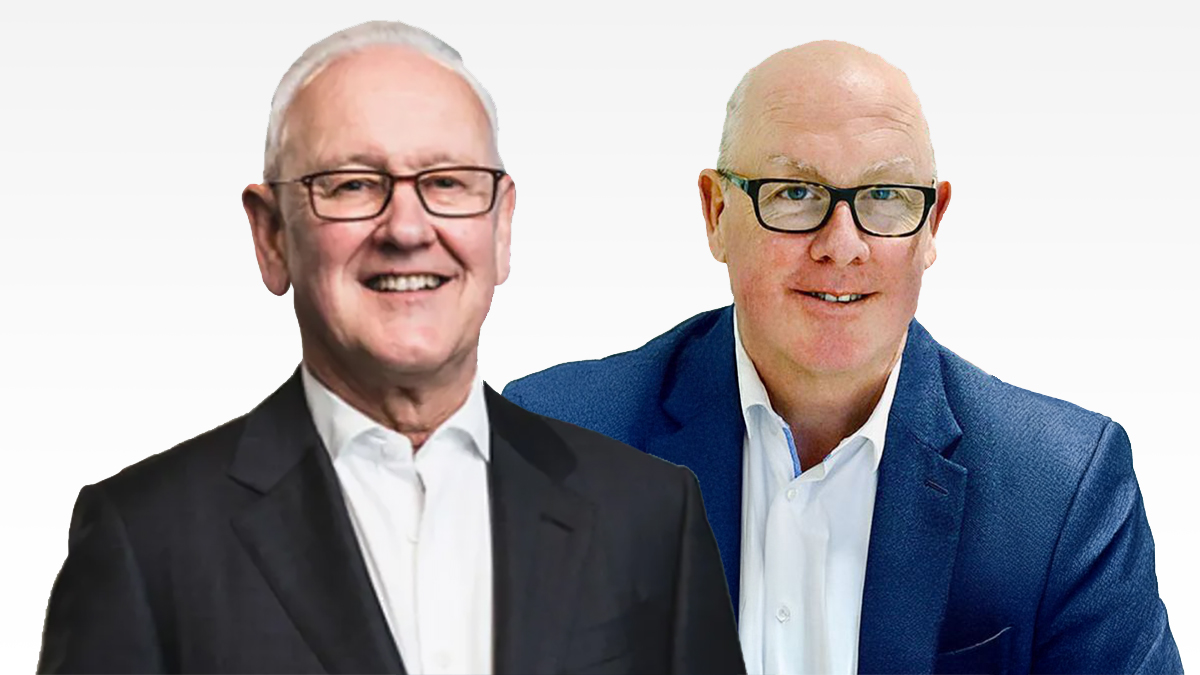
Carbon Underwriting well placed to navigate softening market: Ferrier
‘Our USP was built for a soft market. We’ve had a pretty easy run testing everything, building the team and now this is where I think the next five years is a real test,’ Carbon chief executive says

Lloyd’s insurer’s new chief executive, Jacqui Ferrier, says the business is in a strong position to manage tougher market conditions
Lloyd’s business Carbon Underwriting is strongly placed to navigate a softening market, having built its business as a response to poor underwriting discipline in the market, its chief executive, Jacqui Ferrier, says.
Over the past six years the Lloyd’s business has grown from being one of the first syndicates-in-a-box, writing $15m in business, to becoming one of the first to graduate into a full syndicate. Its most recent syndicate forecast is to write £320m ($425.5m) of business for 2026 and Ferrier says she expects total gross written premium next year to reach around £420m, including the syndicate’s consortia.
“When Carbon came to market with the USP to delegate better, delegate differently, that was really a solution to a potential problem off the back of the headwinds of the hard market,” Ferrier tells Insurance Day. The initial syndicate-in-a-box was launched in 2020, when the hard market was “definitely being felt”.
“Specifically, it was sitting at the box and watching MGA business being written inconsistently,” she says. Many managing general agents at the time lacked data, did not understand their own business mix and failed to understand the drivers of attrition and losses in their books. “If you were to ask any insurance company or Lloyd’s syndicate around at the time what were the 10 perils that drive their attritional loss ratio, they wouldn’t be able to tell you,” she says.
Carbon’s USP
Carbon was launched in reaction to this, with an objective “to do it better” – what Ferrier refers to as its unique selling point. As the winds of the market start to change, Ferrier says she is confident the business is well positioned to manage tougher conditions. “Our USP was built for a soft market. We’ve had a pretty easy run testing everything, building the team and now this is where I think the next five years is a real test – we’ve now got the tools no one else has to be able to ride this soft market.”
Ferrier is one of the four co-founders of the organisation. The long-time chief underwriting officer (CUO) stepped up into the top job earlier this year after co-founder and former chief executive Nick Tye retired following a diagnosis of progressive multiple sclerosis. Ferrier says Tye is doing well since standing down from the role. The changeover has been a smooth one, she adds. “We were a founder business, so we didn’t even have job titles when we started.
“It was historically all hands on deck, so when you look from one role to the next it was an easy transition. From an accountability point of view, as CUO I was the key driver of building the underwriting framework, discipline and appetite and the business generation, really the gatekeeper of what came into the business, what was written.”
“When Carbon came to market with the USP to delegate better, delegate differently, that was really a solution to a potential problem off the back of the headwinds of the hard market. Specifically, it was sitting at the box and watching MGA business being written inconsistently”
Jacqui Ferrier
Carbon Underwriting
It is not just premiums that have grown since the business started. The team has grown from four to 75 people and from writing just property and casualty to writing more than 100 risk codes. To date Carbon has written almost 1.5 million policies across a growing distribution network and has expanded into 78 partnerships across 10 countries. Ferrier says over the past five years the business has had 100% retention of both its capital and reinsurers. “We haven’t lost any partners and also our core MGAs we onboarded back in 2020 are still with us and still core to our portfolio.”
“Over this five years, delivering on our results, delivering on our promises, we’ve built a hell of a lot of trust and confidence around our USP and the people we are. We’re underwriters at heart and it was three underwriters who basically set the business up,” Ferrier says. “When you look at our consortia and the support it has from blue-chip, top-tier Lloyd’s insurers and reinsurers, it really validates who we are. This is business they could potentially write themselves, but they choose to have Carbon lead for them.”
Graphene
One of the pillars of the business is Carbon’s digital platform, Graphene. “The market can get quite excited by AI and algorithmic trading and all that. We have spent our time, energy and effort on trying to get the basics right,” Ferrier says. This means understanding business mix and what is driving attrition and being able to “generate true rate calculations at risk level”.
“The open market is doing this well, but in the MGA market where information is aggregated and data on claims or risk types can’t be pulled from most systems, this is a much harder challenge.”
Graphene helps to create a more open market view on binder portfolios, Ferrier says. “That enables us to be able to work closely with our MGA partners around understanding things like segmentation of risk, loss ration by type of risk, what’s driving attritional loss ratio?”
With Carbon’s partnership with Google Cloud, 85% of data ingested by the platform is now automated, “dramatically increasing speed to insight while yielding significant operational efficiency,” Ferrier says. The platform also uses AI to standardise codification across claims causes and risk occupancies – to help alleviate things like geographical differences in language – and to monitor breaches of contract.
She adds it is the “power of the machine” that has allowed the business to grow as it has with little increase in headcount within Carbon’s operational team. “What that enables us to do is have less underwriting assistance and more underwriters at the front line generating business opportunities.”
Granular view
As the market softens, having a granular understanding of what individual segments are doing is key. “It’s about understanding what are the segments in the market that have problems,” Ferrier says. “It’s around looking at downside alignment, acquisition costs will increase, rates will go down. How do we continue to grow? And maybe we won’t grow too much in the MGA space. It's about maintaining discipline and focus on fundamentals, and maintaining balance in growth.”
Diversification is also important for the business, not just by line of business but geography. Carbon has taken a “slow and steady” approach to its international growth, with its latest frontier being the US. At the end of last year Lloyd’s approved the syndicate’s entrance into the US market.
The timing has very much been driven by positive capital market, with there being “lots of positivity around new money coming into Lloyd’s,” Ferrier says. “Our pitch was very much a ‘lift and shift’ into the US territory, which has always been part of the global plan.”
While much has changed in the five years since Carbon has launched, Ferrier says its core selling point has not. “We keep innovating. Innovate or die. This means more around Graphene – Graphene will never be finished – and leaning into AI. But I don’t think our USP needs to change,” she says.