Davos raised the stakes for risk managers: Ferma’s Cotelle
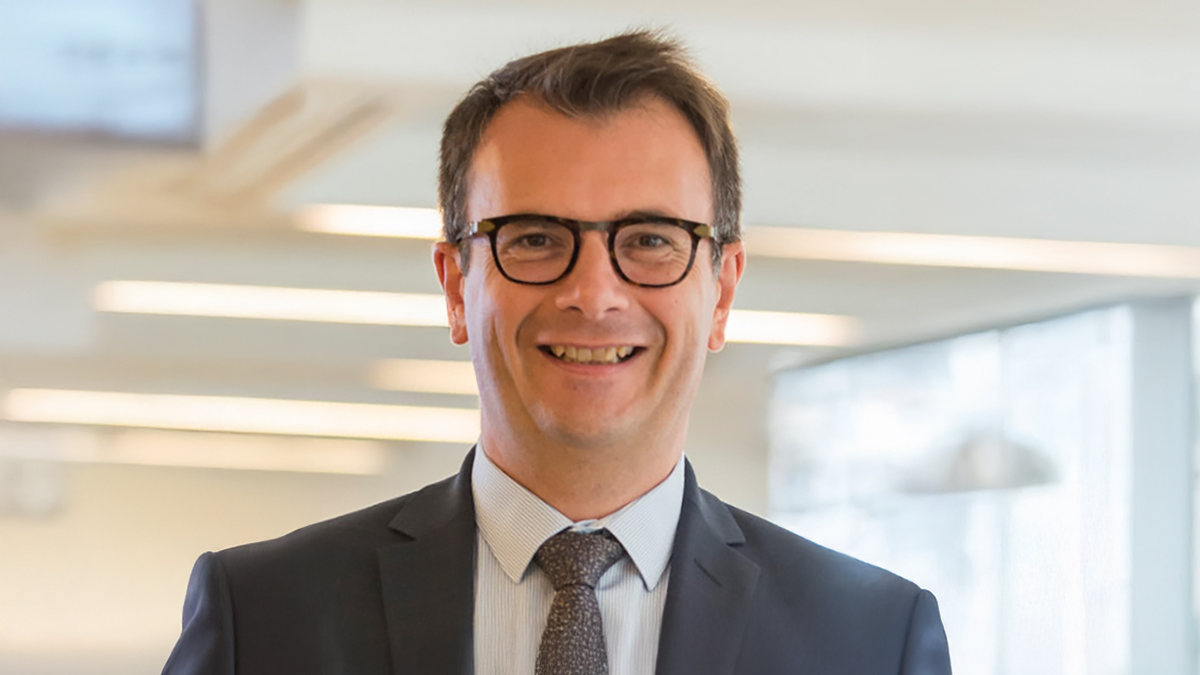
‘Our scale and diversity have huge potential, which we can deliver on by ensuring we are all united behind a shared purpose,’ Ferma president, Philippe Cotelle, says

Head of the Federation of European Risk Management Associations outlines why he is bringing more risk experts, insurers, brokers, economists and technologists into the association’s orbit
The concerns voiced by world leaders at this year’s meeting of the World Economic Forum proved risk managers – and the re/insurers that support them – must turn insight into foresight, according to the president of the Federation of European Risk Management Associations (Ferma).
In an interview with Insurance Day, Philippe Cotelle outlines how Ferma is enabling its members to help decision makers better manage the impacts of global issues.
“Europe has really unique potential and that’s sometimes untapped, when you consider the message in Davos that the West needs to be united,” Cotelle says, adding Ferma must cement its status as an “obvious counterparty”.
“The systemic risks we’re all seeing are not just an economic challenge, but also a societal one,” he continues, “and if we further improve our expertise and the recognition of our role, then we could become the obvious counterparty for our business and political leaders.”
Cotelle is head of insurance risk management at Airbus Defence & Space. In an internal letter seen by Reuters, Airbus chief executive, Guillaume Faury, warned staff the plane manufacturer must be ready to adapt to new geopolitical risks after facing “significant” logistical and financial damage from US protectionism and US-China trade tensions last year.
Airbus is a good example, Cotelle stresses, of the “capacity and power” Europe is capable of. “Airbus is one of those companies that demonstrates when Europe is co-ordinated and united, you can build a world leader,” he adds.
Together Stronger
Ferma brings together 23 risk management associations in 22 European countries, representing more than 6,000 risk managers active in a wide range of business sectors, from major industrial and commercial companies to financial institutions and local government bodies.
Ferma’s reach is “quite incredible”, Cotelle says, but these associations vary widely in size and not all these countries are EU member states. The challenge for Ferma is adding value to them individually while harnessing their combined strength, he adds.
That is why Cotelle chose “’Together Stronger” as the message of his inaugural speech as Ferma president last October. “Our scale and diversity have huge potential,” he stresses, “which we can deliver on by ensuring we are all united behind a shared purpose and take advantage of the cultural, geographical and historical diversity within our membership.”
“If we really want risk managers to act as strategic partners at the heart of the decision-making process then we need to understand this isn’t a given, but something to be earned through the development of impactful and value-adding solutions that are recognised by the top management”
Philippe Cotelle
Federation of European Risk Management Associations
It is essential, therefore, to share best practices and tools, so every member association can benefit from them. “Creating a real community means making collaboration routine, so that developing opportunities for interaction, co-operation, peer learning and mutual support are embedded in our operations,” Cotelle says.
And by “amplifying our combined voice” at the European level, he continues, Ferma will better position itself as a “leading authority on cross-border challenges” and be able to help shape EU policy. “That’s how we’ll be able to address some of the key challenges that extend beyond national boundaries and affect all our members, such as systemic risks like cyber and climate change,” he says. “In this current world, the idea of ‘Together Stronger’ is more important for all of us than ever,” he adds.
Strategic workshop
As a first step towards greater collaboration, Cotelle convened an in-person strategic workshop, attended by the presidents of 15 national risk management associations, to discuss their “concrete needs, contributions and priorities” and to agree practical actions to improve communication, expertise sharing and education. Many of these presidents had never met before, not least because their tenure is typically just two years.
“If you really want to develop a community then you need to create interpersonal relationships between the different presidents to foster a collaborative spirit,” Cotelle says. Each of them presented their respective association’s work, which was “enlightening”, he adds, because it cemented a common motivation to help Ferma evolve. The workshop led to the first co-ordinated communication by all the different associations, he continues, “which demonstrated a new spirit, a new dynamic, which we really want to foster”.
Ferma’s board recently adopted three core actions the workshop’s participants had identified as the most necessary.
The first is to form a “next generation council” for risk managers under the age of 35 to help foster “foresight” on how Ferma needs to evolve, which includes identifying the education and training needs of these younger professionals. This council will report back to Ferma’s leadership by the end of this year.
The second action is to create a new position at Ferma this quarter that will be dedicated to supporting its members with their administrative and communication functions. “The vast majority of our 23 associations don’t have full-time staff,” Cotelle says, “which means those tasks can be a burden that undermines their ability to concentrate on strategic work and can also put off new members from joining Ferma.”
The third action is to launch a “shared knowledge platform” – an easy-access, single portal to capture all the research of Ferma’s members. This will have two benefits, Cotelle says. First, it will help smaller associations gain the knowledge and skills they need to improve risk management practices in their own country. Second, larger associations can avoid duplication of effort by tailoring an existing study to their own needs.
“This will improve our expertise,” Cotelle says, “by helping Ferma to become the most credible source of risk management knowledge in Europe.” An example he points to is development by France’s risk management association, the Association pour le Management des Risques et des Assurances de l’Entreprise, of services and software for medium-sized companies and public organisations to map their exposure to climate risk.
Everyone is a risk manager
The presidents’ workshop focused on education, Cotelle stresses, “because we need continually to equip risk managers so they can fulfil the requirements of a role which is evolving”.
He says: “If we really want risk managers to act as strategic partners at the heart of the decision-making process then we need to understand this isn’t a given, but something to be earned through the development of impactful and value-adding solutions that are recognised by the top management.
“In that way, a risk manager can help an organisation separate the interconnected risks of a polycrisis and be better able to navigate uncertainty across multiple horizons. And that means going beyond the frontiers of their corporation or organisation to include suppliers, investors, regulators and policymakers.”
A polycrisis – from cyber attacks to climate change, from political violence to pandemics – makes “risk managers” of many employees in any given company, Cotelle says. This means the people with that job title are seeing their role evolve into a more strategic one.
More experts
Despite the ideas he has brought to Ferma, Cotelle bristles at the notion he “inherited” the organisation from his predecessor, Charlotte Hedemark. “Nobody owns Ferma,” he stresses. “We are just links in the chain of transmission, providing the best of us for the benefit of our community.”
He continues: “Ferma is already a trusted representative and advocate of risk management. We have a well-established voice and the different stakeholders who engage with us already know Ferma is a recognised centre of knowledge. We are also very clearly a promoter of the profession, which has continuously been the case.”
Nevertheless, he sees room for growth, by bringing more risk experts, insurers, brokers, economists and technologists into the Ferma orbit through joint projects Cotelle says will be unveiled in due course.
As well as appointing Cotelle as its new president, Ferma also named Laurent Nihoul as its next chief executive, whose tenure began on December 1. Most recently general manager and group head of insurance at ArcelorMittal, Nihoul is the first senior figure from the insurance and risk management sector to assume this leadership role at Ferma.
His task is to strengthening Ferma’s advocacy efforts, increasing engagement with member associations and promoting the risk management profession at both European and global levels.
“Insurers and reinsurers are key partners,” Cotelle stresses, “in understanding the evolution of risk profiles, including climate change and the digital transformation, and how to respond to those risks.”
A challenge for insurers and reinsurers, he adds, is “the insurance model needs to evolve as well”. He says although an underwriting strategy is normally based on actuarial analysis of 10 years or more of claims, the fact policies are renewed on an annual basis impedes long-term strategic planning.
“Just because you don’t have all the data you might need, you should still be able to support the evolution of risk management, a process that is already taking place at a company level. And that’s a challenge not just on our side, but also on the reinsurance side, to make sure they continue to be the relevant partner we need,” Cotelle says.
He adds: “The evolution of the underwriting process and the re/insurance coverage in line with the evolution of the risk profiles of organisations, that’s really where our partnership with re/insurers needs to be enhanced to create the value we need.”
Cyber elements
Cotelle is also head of cyber insurance management at Airbus Defence & Space and highlights two elements of that sector: technical risk and systemic risk.
“Technical change is happening at pace, which is both an opportunity and a major threat, with the number of server events and cyber attacks increasing,” he says, pointing to the case of Jaguar Land Rover, which had to halt production for nearly six weeks and reported a £196m cyber attack-related cost in the July-September 2025 quarter. The Cyber Monitoring Centre estimates that the continuing fallout will cost £1.9bn, making it the most economically damaging cyber event in UK history.
A particular concern, Cotelle adds, is there is no typical cyber attacker – they can belong to anything from organised crime to state-sponsored espionage, from terrorists to “amateurs” who treat cyber attacks “like a sport”.
“There’s a broader landscape of different threats that go beyond simply phishing, and artificial intelligence is making those attacks even more efficient and even more plausible,” Cotelle says. On the flip side, he adds, artificial intelligence (AI) is being used to improve protection against cyber attacks.
The development of new technology means systemic cyber risk is a growing issue for risk managers. Cotelle says: “Nvidia, for example, is a company nobody knew maybe five years ago, but now it’s one of the largest-capitalised companies in the world. The more such companies grow, the more you see a concentration of new technology development in the hands of a small number of players.”
Cotelle notes the recent remarks by Amazon’s chief executive, Jeff Bezos, that local PC hardware is antiquated and will be replaced by cloud options. “Again, this means the ownership of technology by a few companies, which just further concentrates the likelihood of systemic risk,” Cotelle says.
“And if you combine systemic risk with geopolitical risk, you hear an increasing number of voices in Europe expressing concerns about the fact the majority of payment systems are located in the US,” he continues. “Moreover, the unauthorised use of a system, could impact not only a company, but a country,” he says, adding this is a topic Ferma is currently analysing.
Climate risk
Asked how risk managers are approaching climate risk, Cotelle says, “the numbers don’t lie” and clearly indicate a rising trend in the frequency and severity of claims, both at the EU and OECD levels.
The value of claims between 2023 and 2025 inclusive were five times higher than in the 2014 to 2020 period, he says, which shows the insurability of climate risk is “at stake” if re/insurers impose tighter pricing restrictions. This demands risk managers act on the “prevention side” to maintain the insurability of that risk, he adds, “because if we can’t insure that risk then it will be the government who has to step in”.
Government intervention on climate risk is not new in Cotelle’s native France, which launched a national natural catastrophe compensation scheme as long ago as 1982. “This isn’t a tax as such, it’s a premium contribution, but that increased from 12% to 20% last year,” Cotelle says. “This kind of system negates the impact of risk management to an extent, because everybody pays the same,” he adds.
The risk manager’s role, he stresses, is not simply to focus on the losses caused by a natural catastrophe event, as a government would, but on the circumstances and behaviour of the victims to reduce future claims.
On the trend towards more public-private partnerships in managing climate risk, Cotelle says it is the job of the private sector to “find solutions and foster initiatives”, so reliance on public authorities is only a last resort. “That’s the only way that you can maintain an efficient risk management system,” he adds.
Insurance solutions must be sustainable, however. For example, parametric insurance may speed up the process of getting payments to victims compared to national and international aid, but as natural catastrophe events become more frequent and severe, overuse of it would lead to it becoming unaffordable for most.
“If risk management is about prevention then there needs to be a culture of identifying your potential exposure and trying to mitigate it as a priority,” Cotelle says.
Ferma is analysing nature-based solutions to climate risk and Cotelle says he will be able to announce his involvement in an initiative on biodiversity exposure in due course.
Widening the lens
Ferma launched its foresight committee in 2024 to help its member organisations move beyond short-term crisis management and embed risk management within overall business strategy. Ferma also expanded its Global Risk Manager Survey beyond Europe for the first time that year, attracting more than 1,000 respondents from 77 countries.
The 2026 survey is open to risk managers until the end of March, and the results will be revealed at the Ferma Forum in Rotterdam on October 4 to 6, which it has named “Widening the lens: from risk insight to strategic foresight”.
The foresight committee comprises a range of experts – from economists to futurists, from lawyers to policy analysts – who help Ferma reach beyond its usual stakeholders. Their collaboration produced the New EXposure Trends (NEXT) report, which addresses four “mega-trends”: geopolitics, climate change, technology and human capital.
“We have developed, through dialogue with those experts, the capacity to identify the factors and influences of those trends over the next five to 10 years, to enable risk managers to build scenarios that are adapted to the reality of their organisation,” Cotelle says. “In doing so, they will be able to present their board with not merely insights, but interesting foresight on the potential impact of these four trends for the company.”
The Ferma Forum will expand on this topic. “Over the two-day event, we will have a range of speakers addressing how risk professionals can move beyond more conventional, siloed, short-term perspectives to develop a more holistic, forward-looking and value-driven approach to risk. It’s about shifting the focus from understanding risks as they are today to anticipating what may emerge tomorrow,” Cotelle says.
In that way, the risk management community is no longer rooted in the “day-to-day challenges”, but formulating a five-year strategic plan, he stresses, which means insurance is no longer seen as “just a safety net, but as a forward-looking strategic enabler”.