Climate risk demands a change of mindset: Marsh’s Surminski
‘The insurance sector needs to work hard to increase resilience and not merely transfer climate risks,’ says Marsh Risk’s Swenja Surminski

Marsh’s climate thought leader explains why climate change is a strategic risk
SWENJA Surminski’s single best piece of advice for re/insurers is to stop seeing climate risk as an environmental issue and instead approach it strategically. That means changing their longstanding mantra of risk transfer to risk reduction, and their reactive payment of claims to the active prevention of losses.
As managing director of climate and sustainability at Marsh Risk (formerly Marsh McLennan) and, simultaneously, a professor in practice at the London School of Economics and Political Science, Surminski applies her experience of business and academia to climate risk strategies. In addition to these prominent roles, she is a member of the UK government’s Climate Change Committee and chair of the Munich Climate Insurance Initiative.
Many of Marsh Risk’s clients have already started to examine climate risk through a strategic lens, Surminski says in an interview with Insurance Day, and they understand that the next step is to integrate this risk into investment and operational decisions.
“Climate risk really needs to be brought into day-to-day decisions,” she says, “because it requires insurance, not just to protect against loss, but to unlock opportunities and to increase resilience.”
This means a change of mindset for traditional re/insurers, she continues, to putting risk reduction before risk transfer. A good example of this is a novel programme run by North Carolina Insurance Underwriting Association that incentivises homeowners to install rooves that can withstand extreme winds. “The resilience bond placed by Guy Carpenter Securities that focuses on fortifying rooves is part of our traditional approach to insuring or designing cat bonds,” Surminski says. “It’s about looking at how to be there, not just to pay out after loss, but to help communities to become more resilient in the first place. That’s a mind-shift.”
Reflections on COP30
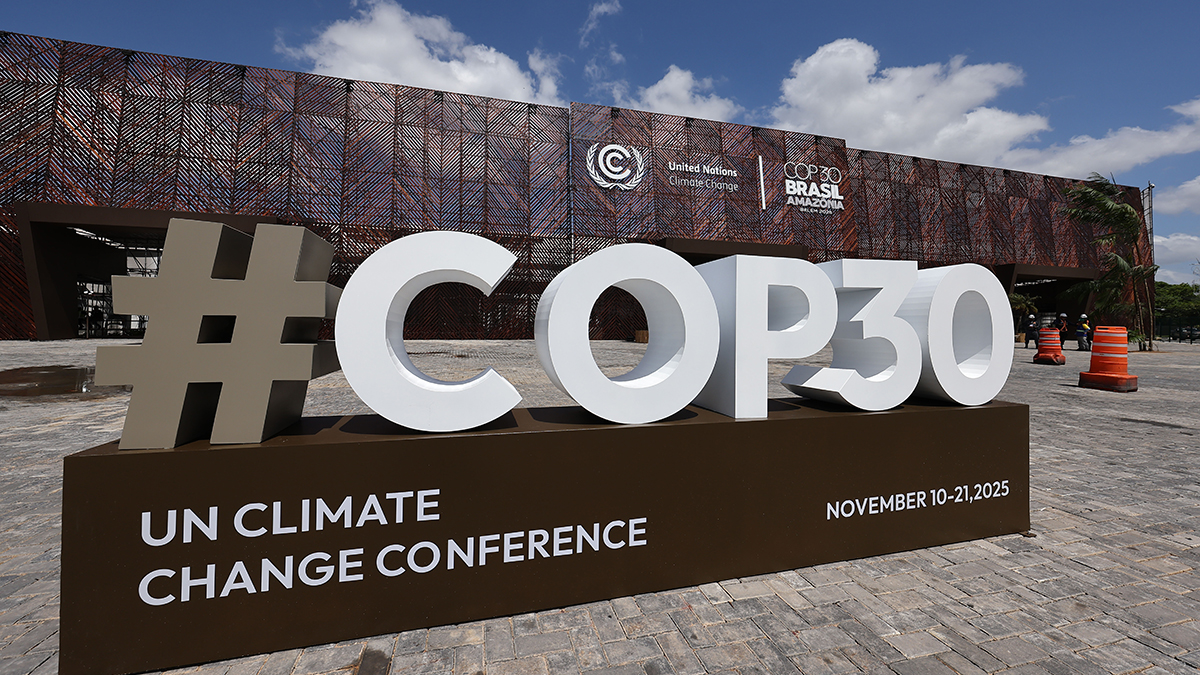
Marsh regularly attends the United Nations climate talks, but COP30 in Belém last year stood out as the first to provide a venue dedicated to insurance. Surminski spoke at this Casa do Seguro (House of Insurance), which was convened by the Brazilian Insurance Association (CNseg), and supported by Marsh and several insurers, to showcase insurance industry leadership in tackling climate change, nature loss and the protection gap.
This underscored Surminski’s sense that insurers are “no longer observers” at climate talks but “central actors”, not least because policymakers know they must move from high-level commitments to practical implementation.
She explains: “We as a company attend COPs because our clients are there, because we have solutions to share, and because collaboration across sectors is essential. But the first-ever House of Insurance was an opportunity to showcase global leadership in innovation. Marsh sponsored the House of Insurance and held a joint event with the City of London Corporation and CNseg to demonstrate innovation in the London market.”
It may appear that progress with such efforts is overshadowed by geopolitical and regulatory uncertainty, she continues, but in fact re/insurers continue to work on solutions for all the “core pillars” of climate risk — mitigation, adaptation and resilience.
COP30 also showed, however, that the protection gap “remains enormous”, she stresses, adding that Marsh used the event to unveil a report it co-authored with the Inter-American Development Bank — Resilience Now — which shows that Latin America and the Caribbean alone face $1.2m in climate related losses every hour, and much of that is uninsured. The finance needed to address this requires re/insurers to flip their usual script, from addressing losses to preventing them, Surminski says. There are encouraging examples of this change in mindset, she adds, such as parametric products for disaster response and solutions that integrate risk analytics with resilience planning.
“A big focus of the ‘Resilience Now’ report was on how we can use our risk analytical tools like cat models to also incorporate that resilience role that nature plays. Is there cover for nature-based solutions? Are there products that insure natural assets? What can be done in the context of carbon markets?”
Swenja Surminski
Marsh Risk
A noticeable feature of the climate talks, she adds, is that nature is becoming “intertwined” with innovative solutions to climate risk.
“Nature is often our first buffer, such as when a storm hits, by absorbing a lot of the damage, but at the same time there’s the challenge of nature and ecosystem loss. So, a big focus of the ‘Resilience Now’ report was on how we can use our risk analytical tools like cat models to also incorporate that resilience role that nature plays. Is there cover for nature-based solutions? Are there products that insure natural assets? What can be done in the context of carbon markets? There is more innovation taking place, but nature risk is still an emerging area.”
The Belém talks had been dubbed the “implementation COP”, but did this turn out to be a fair characterisation?
“To some extent, yes,” Surminski says, “because there is a lot of demand from clients to help them with their transition investments, their emissions reductions and their resilience plans. This shows how insurance can help to de-risk a project to make it more investable.”
A growing emphasis on biodiversity, ecosystem restoration and nature-based resilience is evidenced by the EU-funded Naturance project — “nature for insurance, insurance for nature” — which Surminski leads with her team at the LSE’s Grantham Research Institute to find nature-positive insurance and finance solutions that support adaptation and risk reduction, especially in vulnerable regions.
While it may be “a bit early” to have an Insurance House at the UN’s separate biodiversity COPs, Surminski says she hopes there will be one at the next climate COP, in Türkiye, and that nature will again be a “cornerstone” of the talks.
Equitable risk reduction
Surminski’s team at the LSE investigates how the insurance industry can address climate, nature and equity goals. Asked how they can design products to address all three goals, she says, “There is no universal blueprint, but there are principles, and good pilot examples to learn from.”
She continues: “The first rule is to understand the context because the needs and requirements of a community, business or government can vary significantly.”
The key point is to avoid trade-offs, she stresses. “It's risk layering. Don’t start with the insurance question, but with how to manage the risk better, so that you already have a focus on resilience when you come to look at the insurance, to help deal with larger residual risks,” she says.
On social equity, Surminski points to Blue Marble, a collaborative venture run by Marsh and a consortium of insurance companies to promote the use of parametric insurance solutions for remote and low-income communities. “Engaging with communities to make sure their needs are met is at the heart of this,” she says.
To better recognise nature’s role, she encourages re/insurers to define and quantify a “natural asset” in the context of risk reduction. A classic example, she adds, are mangroves, which can absorb up to 75% of storm damage along a coastline. “Do we have the right tools to factor things like that into our risk analysis? And can we incentivise communities and businesses to work with nature? The main thing is making sure there are no trade-offs,” she says.
Surminski also highlights the community-based catastrophe insurance (CBCI) that Guy Carpenter, a Marsh business, developed in partnership with the Wharton Risk Management and Decision Processes Center. In a CBCI programme, a community — loosely defined as any community organisation, special-purpose district, or public entity — arranges insurance protection on behalf of its members or to the benefit of its members.
By securing coverage for a group of properties, CBCI has the potential to help close the disaster protection gap, improving financial recovery for communities. CBCI could also be designed to provide more affordable disaster insurance coverage and could be linked directly to financing approaches for community-level hazard mitigation. Surminski says the goal of CBCI is to address risk reduction in a way that keeps insurance affordable, ideally by also incorporating nature.
The principles of climate, nature and equity are not “revolutionary”, Surminski stresses, but it is crucial to “spell them out” when designing insurance schemes for communities, particularly those in low-income and high vulnerability contexts. “It's about smart solutions realising co-benefits. Risk reduction that is relevant to communities, is affordable and which includes nature — for example, with wetlands or urban green space — is hardly a revolutionary idea, but it is helpful to spell it out again and again,” she says.
Data at its heart
Just as it is for insurance, data is at the heart of resilience planning and implementation, so that risks can be prevented. And for data to prevent risk, it must encompass the “trinity” of hazard, vulnerability and exposure.
“Existing models and tools have really improved, including through the use of satellite-based observations, as well as open-source risk platforms, and public-private climate service partnerships. We’ve really moved way ahead, but we still face challenges when we try and integrate the hazard, exposure and vulnerability components into cat models,” Surminski says.
“And with climate science we can also get a view on what future risk looks like across different climate scenarios, but very rarely do these tools show you what you can do to reduce the risk and how that changes the risk equation,” she adds.
Remedies such as flood defences or better building codes matter, as they “change the equation”, she says, but the ultimate aim is to calculate the total cost of a risk.
Data quality and availability also vary according to region, with the most vulnerable countries having the greatest lack. “Data scarcity in emerging markets makes insurance innovation in those regions quite challenging because investing in tools and models can be time consuming and expensive,” Surminski says. “Hopefully, with new innovations, such as artificial intelligence, and new approaches to incorporating nature into analysis, exciting things can happen,” she adds.
Narrowing the protection gap thus requires enabling vulnerable communities to have better access to data. “If you want people to make the right choices, be that about insurance, be that about where they build and how they build, be that how a government prioritises where to spend public money on risk protection, they will need data,” Surminski says. “I have big hopes in making existing data and tools more accessible, so there is better visualisation that can drive more resilient behaviour,” she adds.
“If you want people to make the right choices, be that about insurance, be that about where they build and how they build, be that how a government prioritises where to spend public money on risk protection, they will need data”
Swenja Surminski
Marsh Risk
Traditional analysis has changed significantly, so that catastrophe models are now incorporating climate change and integrating resilience features, such as fortified rooves, property level flood resilience measures or mangroves along a coast. However, this approach is not yet standardised and often requires a lot of time and effort, Surminski says. Another challenge is keeping up with the science of climate change’s influence on the ways a hazard behaves.
“Our traditional approach is to model one risk on a standalone basis, but what we really need to understand is how these behaviours are interlinked, which means taking a systemic view of risk,” Surminski says. “This is a challenge for models, but our awareness is clearly increasing,” she adds.
Surminski doesn’t find the distinction between primary and secondary perils useful because she says it is often misunderstood. “Secondary in that context doesn’t mean that they are minor, but rather are the knock-on effects from primary perils. For example, a flood is often a consequence of a windstorm. That was the initial way of framing it, but when it comes to modelling and data, the severity and frequency of extreme weather events have pushed up demand for better tools on all fronts,” she says.
An example of a better tool, she continues, is the probabilistic flood modelling system that Guy Carpenter launched for Brazil last year. The company is confident this will be fundamental to understanding, quantifying and managing portfolio flood risks, in addition to promoting the reduction of the coverage gap with business expansion and sector resilience.
Imperfect science
Bridging academia and business means that Surminski is “pragmatic” about science and accepts there is no commercial sense in waiting for the “perfect” model.
“I have very strong links to the academic world and, through my LSE team, I can spend time looking from a purely scientific standpoint at what the challenges are with the existing catastrophe models. But then I look at the implementations side and the need to be pragmatic,” she says.
“We also need to recognise that models are just models, and though they can be improved, they're never going to be perfect. The main thing is how to interpret them in the context that climate change is the ‘new normal’. And climate change means surprises because the climate system is messy, and so relying on one model or, even worse, relying on one climate scenario, isn’t going to be reliable,” she adds.
Fundamentally, modelling climate risk is not a linear process, but rather a complex and dynamic system. “There’s going to be some interesting work concerning the potential tipping points and tail risks, which are the really scary parts because quantifying them is still very hard,” Surminski says. “What we can do is to start incorporating that uncertainty into our understanding of floods and winter storms, and so on,” she adds.
Surminski’s career in climate risk began when she was a PhD student in Munich Re’s geoscience department, but there had already been warnings for decades about the potential impacts of climate change on re/insurance.
“The first publications warning about climate change and the implications for the insurance industry go back to the 1970s, so it's really not a new topic,” she says. “Now, as then, it’s about becoming more focused on prevention and risk reduction.”