How a prolonged Gulf conflict could squeeze P&I clubs
What marine mutuals pay for - and what they don't

Exposure limited for now, as Standard & Poor’s flags possible risk to investment returns
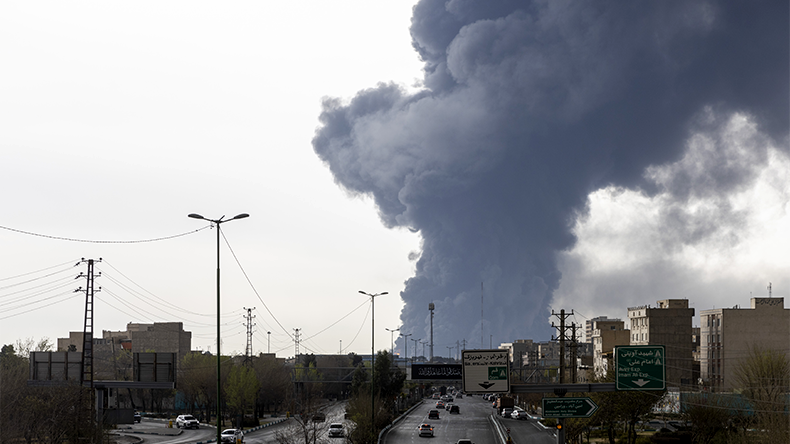
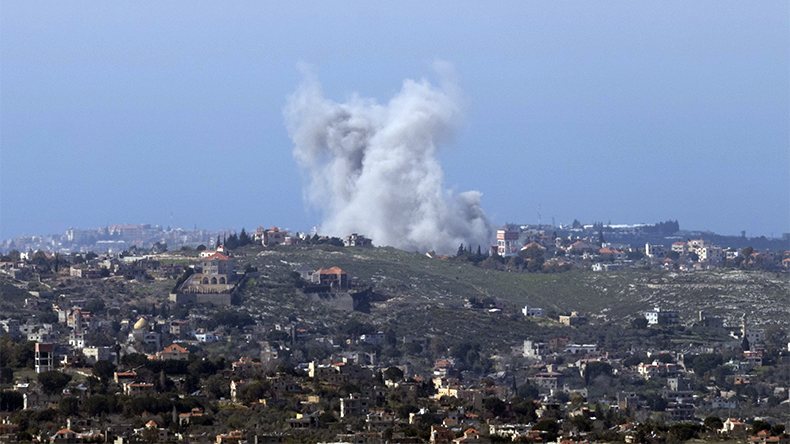
P&I clubs are immune from the worst fallout of the current hostilities in the Middle East Gulf, at least for the time being. But things could change if the fighting is prolonged, according to a top ratings agency.
While most club leaders would probably concede conditional agreement with the main contention here, some believe Standard & Poor’s may have got some of the details wrong.
Marine insurance has had a rare moment in the limelight for the past two weeks, and S&P’s findings offer a chance to go into the detail on how the whole system works, especially when the missiles are flying.
The starting point is that clubs are there to provide the maritime equivalent of third party, fire and theft. They do not write what most of the public would understand as war risk insurance. Indeed, war risk is expressly listed as an exclusion in club rulebooks.
Instead, shipowners have to buy war risk policies separately either from a specialist war risk mutual such as Norway’s DNK or Britain’s UK Defence Club, or from a commercial provider at Lloyd’s or elsewhere.
This is known as “the primary policy”, which for most purposes equates to the war risk policy. The snag is that most insurers limit primary policy cover to the hull value of the insured vessel and claims can often go beyond that, especially if they entail pollution clean-up or wreck removal.
At this point, the clubs re-enter the picture, with an offer of “excess war risk” cover for a further amount, typically $500m, where the claim of a claim exceeds the value of the primary policy.
For shipowners, this comes as a handy little extra that forms part of their all-purpose annual P&I package. Not being shipowners, charterers have to buy the excess cover separately as a “charterers’ war risk extension”.
Cancelled war risk
Yes, these arrangements are complicated and the nuances are obviously lost on the mainstream media. This was apparent when major broadcasters and business newspapers last week reported that P&I clubs had ‘cancelled war risk insurance’ for vessels caught out in the hostilities between the US and Israel and Iran.
Not so. Shipowners saw absolutely no change. Their primary policies stood as agreed, and so did their excess war risk cover, with International Group clubs ready to share any payouts through the pool scheme in the normal way.
However, charterers’ war risk extensions are not part of the pool agreement and reinsured through Lloyd’s and other reinsurance providers. Every club fends for itself and reaches its own deals.
As the first air strikes hit Tehran, charterers’ war risk reinsurers became nervous and exercised their contractual right to cancel reinsurance at 72 hours’ notice.
That left clubs with no option but to cancel charterers’ risk extensions and replace them with a new product at a higher price, reflecting the higher risk for ships in the Middle East Gulf.
Replacement or “buyback” policies were on the market by the time the old contracts expired, with some underwriters putting in 20-hour days to make that happen.
Admittedly, the buyback is hardly cheap. Many charterers face premiums of $30,000 a week rather than $25,000 a year. But for a trading house set to pick up windfall profits from current oil prices, that will be small change.
And if it comes to that, they also have the straightforward option of not buying the buyback, which is not legally mandatory.
That could leave them hundreds of millions of dollars out if it determined that they have liabilities in excess of hull value. But if a company has sufficiently deep pockets, it can feasibly decide to take that chance.
On the hook for normal risks
To put things in layperson’s terms, clubs remain on the hook for the normal range of P&I risks, whether in the gulf, any other war zone or some lovely peaceful place.
If a seafarer attempting to transit the Strait of Hormuz today falls off a ladder or develops appendicitis in the normal way of these things, the medical fees will be footed by the club.
If the same seafarer were badly burned after the vessel hits a mine, the hospital bill would go to the war underwriter. And so on.
Obviously, there is potential for disagreement between clubs and commercial insurers on who takes responsibility for what. But this can usually be ironed out by sitting down and talking about it.
Occasionally, the difference can be split via apportionment, which is a deal to share such costs 50/50, 60/40 or whatever. Legal action would be a last resort, but things rarely get that bad.
After that, marine insurance mechanisms become more mysterious still. Some clubs “write follow lines” — which is insurance jargon for taking a 5% or 10% slice of any eventual payout pot in exchange for a pro-rata share of the premium up front — on commercial marine war risk propositions.
Obviously, if they have a follow line on a total loss, they will have to pay out from their own resources in the first instance, as commercial non-mutual business is not poolable. Alternatively, they may be able to shunt most of their share onto their reinsurers.
A handful of International Group affiliates have dabbled with fixed-premium war covers, written on a commercial basis to subsidise mutual entries. But such forays are aimed at smaller and thus less valuable tonnage and will also have been reinsured, limiting possible losses to retentions.
The research note from Standard & Poor’s argues that most marine-related losses emanating from the fighting will ultimately land with the reinsurance market.
The proposition that political risk for the shipping industry, particularly for vessels planning to transit the Strait of Hormuz, has been heightened is entirely uncontroversial, of course.
Greater exposure
Although several ships have been damaged to date and many more remain stranded in the region, exposures for P&I clubs have so far been limited. But the longer the conflict continues, the more that exposure could rise.
S&P said: “While we expect short-term losses to be manageable, the ultimate impact on the clubs’ earnings and capital will depend on the conflict’s scale and duration.”
“Risks remain elevated for the clubs, particularly concerning potential losses related to crew welfare, repatriation costs, passenger liabilities and injury claims, all of which fall within P&I coverage depending on the circumstances.”
That is not quite the case, according to one of the larger clubs, which preferred not to be named. These are war P&I risks and not mutual P&I risks, and S&P’s assertion is erroneous. The International Group has published a note on the distinction on its website.
Some marine mutuals, both within and outside International Group, offer loss of hire cover, protecting shipowners against a loss of income when a ship is out of operation.
However, this is typically linked to physical damage to the vessel, rather than situations where vessels are trapped. While several vessels have sustained damage in the conflict, S&P’s experience suggests that this business line is also heavily reinsured.
Investment returns
Perhaps the biggest known unknown is what will happen to club investment returns.
Free reserves have largely been placed in low-risk government and corporate bonds. This strategy clearly pays when bond markets do well, as they have done of late.
Following the renewal round that expired on February 20, NorthStandard — the number two club by market share — confirmed that its investment returns last year came in at a healthy 9%.
There is no reason to suspect that the other 11 will not have enjoyed returns of the same order.
This source of income serves to mop up the deficit when clubs make a loss on their technical underwriting. In recent years, this stricture applies to most of them, most of the time.
That said, some clubs have sought to pep up their investment income by allocating part of their reserves to equities and other higher-risk assets, and these markets have dropped in response to latest war.
But even here, no club is known to have bet the ranch on dodgy cryptocurrencies or speculative AI stocks and would have been mocked as foolish had they done so.
“Direct asset exposure to the Middle East is limited, and we don’t anticipate current losses will significantly impact earnings or capital,” said S&P.
“However, as many clubs rely on investment gains to offset underwriting losses, a prolonged downturn could negatively affect their bottom line.”
The comeback from one world-weary P&I chief executive essentially boils down to “what’s new?” As he pointed out, financial markets are perpetually volatile.
Before the Middle East Gulf fighting, there was fear of a tech stock sell-off and after the fighting calms down, there will be a fear of something else.
We will only know how well, or just possibly badly, club investments did when they publish their audited accounts in the coming months. But at a best guess, it is doubtful that any of them will come spectacularly unstuck.
This article first appeared in Lloyd's List, a sister publication of Insurance Day