Insurers must help society build a culture of prevention: Bacani
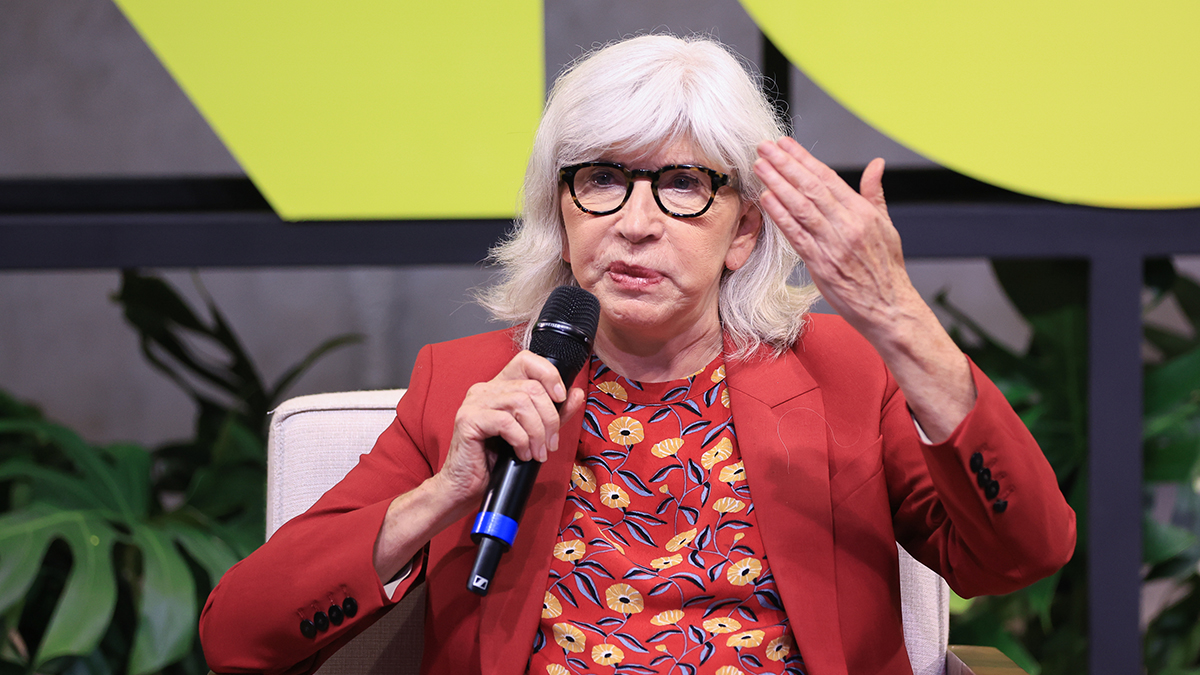
‘There has to be a societal shift in approach, from a focus on post-disaster recovery to a focus on pre-disaster resilience, putting risk management and insurance at the start of policy, infrastructure and financing decision-making processes,’ UNEP’s Butch Bacani says

United Nations Environment Programme’s head of insurance explains why re/insurers must occupy the front line of climate strategies
THE realisation of the insurance sector’s key role in supporting a resilient and sustainable transition of the real economy is spreading fast, according to the head of insurance at the United Nations Environment Programme (UNEP), Butch Bacani.
In an interview with Insurance Day, Bacani describes the momentum re/insurers created at COP30 and lists the key milestones for them in the run-up to COP31. The goal, he says, it to address the “looming global insurability crisis that could affect bankability and investability in the wider financial system”.
Those milestones involve UNEP’s two core insurance initiatives: the Principles for Sustainable Insurance (PSI) and the Forum for Insurance Transition (FIT), which were launched in 2012 and 2024, respectively. At the UN, Bacani leads both initiatives, which have different structures and are governed independently of each other.
First, the PSI will be conducting a flagship project on the role of insurance in the de-risking and scaling of public and private finance for climate adaptation and resilience projects.
“This aims to show the links between insurability, bankability and investability,” Bacani says, “and also a shift needed in the approach of policymakers and financial institutions from their traditional view of insurance in terms of post-disaster relief and recovery, to one that puts risk management and insurance at the start of policy, infrastructure and financing decision-making processes to build pre-disaster resilience, and goes all the way to the end, where insurance will still play the role of a risk transfer mechanism.”
Second, the PSI aims to launch in the next few weeks the results of the first-ever landscape study of “climate smart financial services” for micro-, small- and medium-sized enterprises (MSMEs).
Bacani says MSMEs face the “double whammy” of climate shocks resulting in the loss of assets and income, and the stress of obtaining credit and repaying bank loans. A win-win situation, he adds, is tailored risk reduction measures and insurance products that enable MSMEs to become more adaptive and resilient to physical climate risk, which also means they are better able to meet their obligations to lenders.
Third, the PSI’s working group for nature now has a “multi-stakeholder, global community practice, where risks and opportunities are increasingly being assessed, quantified, and embedded in underwriting processes”, Bacani says, “because healthy and resilient ecosystems are an integral part of any climate strategy”.
Meanwhile, the FIT is building on the “total balance sheet principles” that it unveiled at COP30, which for the first time, link the underwriting and investment portfolio of an insurance company in a transition plan context. These principles are essential to help ensure “cognitive consonance” within insurance companies, and an “invitation for different stakeholders to chime in”, Bacani says.
The next step is to support companies on how to “operationalise” these principles, using key platforms such as London Climate Action Week this June, where UNEP Finance Initiative will convene its biennial Global Roundtable, with the theme “From risk to resilience, financing the future”.
Bacani explains: “The two professions within an insurance company, underwriting and investment, must work together for the long-term resilience of their business, and to drive positive, real-world impacts for communities and the real economy.”
“The two professions within an insurance company, underwriting and investment, must work together for the long-term resilience of their business, and to drive positive, real-world impacts for communities and the real economy”
Butch Bacani
United Nations Environment Programme
Whole-of-society approach
FIT issued a COP30 insurance communiqué that called for a whole-of-society approach to reduce climate risk, improve insurability and build resilient communities and economies. One of its recommendations is the creation of an International Taskforce on Climate Resilience and Transition Insurance. This recommendation was endorsed at COP30 by Laurence Tubiana, chief executive of the European Climate Foundation, one of the architects of the 2015 Paris Agreement, and a special envoy of the COP30 Presidency.
The communiqué warns of a “looming global insurability crisis” and the dual climate and nature crises, Bacani says, and spells out how to harness the risk management, risk carrying and investment capabilities of the insurance industry to support a just transition to resilient and sustainable economies.
There are various ways, he adds, including incorporating climate and nature scenarios into catastrophe risk models in a way that will “sharpen the axe” so that each re/insurer can become “even more useful” by also playing the role of risk manager, helping society better understand and reduce risk.
As a multi-stakeholder forum convened and led by the UN, the FIT brings together insurers, regulators, civil society, academia and others. Its first report, Closing the Gap, was launched in 2024, at COP29 in Baku, Azerbaijan, to address the need for insurance-specific guidance on transition plans.
It then launched Underwriting the Transition — the first-of-its-kind transition plan guide tailored for insurance and reinsurance underwriting portfolios — in 2025, at the inaugural Global Transition Insurance Summit convened by the FIT and hosted by the European Insurance and Occupational Pensions Authority in Frankfurt-am-Main, Germany.
This was followed by the launch at COP30 in Belém, Brazil, of the FIT’s Total Balance Sheet Transition plan principles. The FIT is scheduled to launch its fourth global guide that will operationalise these principles at this year’s London Climate Action Week.
“The FIT has essentially set the guiding star for insurance company-specific transition plans, which can be viewed as the de facto global standard,” Bacani stresses.
Such voluntary global guidance from the FIT is timely and relevant. For example, this March, the Monetary Authority of Singapore (MAS) issued three sets of Guidelines on Environmental Risk Management – Transition Planning for banks, insurers and asset managers, which take effect in September 2027. MAS is a member of the FIT’s Consultative Group of Insurance Regulators and Supervisors, along with 15 other supervisors from across the globe, including the Australian Prudential Regulation Authority, the Bank of England’s Prudential Regulation Authority, and the European Insurance and Occupational Pensions Authority.
The FIT’s work on insurance company-specific transition plans is gaining traction globally. Also this March, Bacani presented the outputs of the FIT’s Transition Plan Project at the Learning and Exchange Series of the International Transition Plan Network (ITPN), with over 50 policymakers, regulators and members of ITPN’s Community of Practice from jurisdictions — including South Africa, Egypt, Japan, France and the UK — joining the session on insurance and transition plans.
Re/insurers must be cautious of a “paper transition”, Bacani warns, and ensure that there is “real-world impact” by supporting their clients and sectors in the real economy to move towards greater resilience, decarbonisation and a nature-positive transition. This also means insurance strategies on how to engage with corporates on Scopes 1, 2 and 3 emissions, on adaptation and resilience, and on nature-related risks and opportunities, he adds.
Triple role of insurers
Another important goal, he continues, is for these transition plans to help policymakers — including negotiators at UN climate and biodiversity talks — embed and harness the triple role and capabilities of insurers, as risk managers, risk carriers and investors, in Nationally Determined Contributions, National Adaptation Plans, and National Biodiversity Strategies and Action Plans.
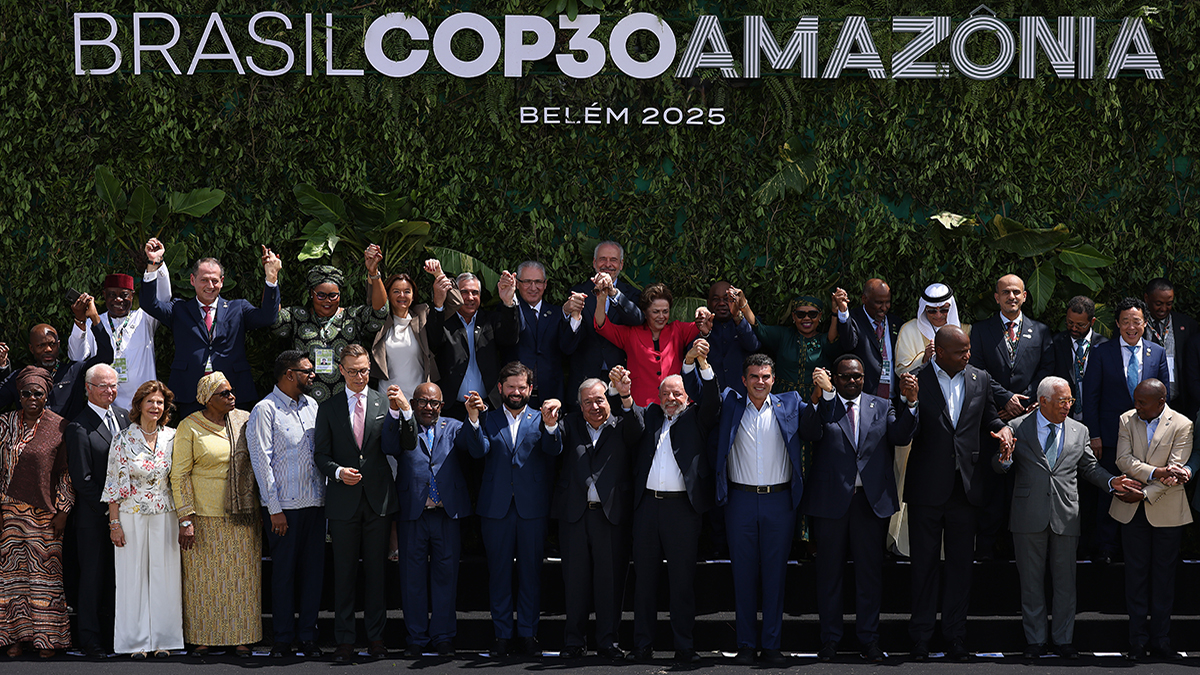
The climate talks in Belém last November were the most successful COP to date in shining a light on insurance, Bacani says, thanks to various efforts by insurers, the UN and key stakeholders, including the COP30 Global Sustainable Insurance Summit, which took place at the sector’s very own venue — Casa do Seguro (House of Insurance). Convened by UNEP in collaboration with the Brazilian Insurance Confederation (CNseg), the summit showcased insurance industry leadership in tackling the climate and nature crises and the protection gap.
“While there was a recognition of the role of insurers in the past, it was more peripheral, rather than core to the agenda, but COP30 brought that role to light,” Bacani says.
He continues: “There were people beyond the insurance industry, political champions, who were speaking about the role of the insurance industry as risk managers, risk carriers and institutional investors in supporting the transition, whether from a resilience or decarbonisation perspective. And I think it showed these different roles carry weight.”
There are efforts under way by UNEP, re/insurers and others to build on the success of the COP30 Global Sustainable Insurance Summit.
“We’ll have to see in what shape and form it takes, but there are definitely efforts to replicate what was done on the insurance front at COP30,” Bacani says.
The novelty of COP31 is that two countries are involved — Türkiye as host and Australia as president of the negotiations. Moreover, COP17 to the UN Convention on Biological Diversity will be held a month before COP31, in Yerevan, Armenia, which means nature-related messages will be fed into the climate talks. There will also be a precursor to COP31, in the Pacific, which will mirror the Amazon-based COP30’s closeness to communities facing an existential crisis — in this case, small island developing states.
It has become increasingly clear, Bacani says, that a climate strategy must include adaptation and resilience, decarbonisation and ensuring healthy ecosystems.
He explains: “Understanding that addressing emissions as a root cause of risk is important, but even if we could get to a decarbonised economy tomorrow, we are already feeling, and we will continue to feel in the years to come, the physical impacts of a changing climate. This is the reality that confronted many of the participants at COP30; that, wherever in the world you are, you are increasingly seeing adverse climate-related impacts.”
Climate risk is no longer a global south issue, he stresses, and extreme weather events are occurring more often in high-income regions, including Australia, Europe and North America.
Risk-based pricing ought to reflect the underlying risk exposure, which is growing and taking the cost of insurance up with it, Bacani continues. “There is the likelihood that uninsurability will create systemic problems, where properties, for example, become increasingly unbankable and uninvestable,” he says.
Reducing emissions, strengthening adaptation and building resilience, and reversing nature loss, must go hand in hand, he stresses. This means, for example, transitioning to renewable energy, ensuring sustainable land use planning and development, using drought-resistant crops, and ensuring disaster preparedness. It also means risk transfer solutions should reach all levels of society, particularly low-income households and communities, “who are often the first and hardest impacted”, and MSMEs, “which are the economic backbone of many economies, but are systematically vulnerable to climate shocks”.
Ignoring any of these elements of climate risk management is like “fanning the flames” instead of fighting the fire, he adds.
Soft and hard limits
It is vital to heed the warnings of science of the soft limits and the hard limits to climate adaptation. Soft limits, such as the inability to build flood defences or the lack of access to drought-resistant crops, could be overcome by more finance and technological advancements. Meanwhile, hard limits, such as warm-water coral reefs crossing their thermal tipping point and experiencing unprecedented dieback, coastal ecosystem collapse, and sea-level rise making small islands uninhabitable. Once crossed, these points are where no further adaptation actions are possible.
“The climate and nature crises are two sides of the same coin. Climate change is one of the major drivers of nature loss, and nature loss is a major driver of climate change,” Bacani explains. “Conversely, having healthy and intact ecosystems is important to sequester carbon and to buffering hazards such as storm surge in coastal communities.
“Therefore, the more we integrate nature into our climate strategies and integrate climate into our nature strategies, the more evident a positive loop of resilient economies and safer communities will become, which will also help to improve insurability.”
“The climate and nature crises are two sides of the same coin. Climate change is one of the major drivers of nature loss, and nature loss is a major driver of climate change”
Butch Bacani
United Nations Environment Programme
On the need for a whole-of-society approach to tackling climate risk to improve insurability and build whole-of-economy resilience, Bacani stresses that he and other participants in the COP30 Global Sustainable Insurance Summit, did not confine themselves to the House of Insurance. They ventured into the COP’s Blue Zone, where the official diplomatic negotiations take place, the Green Zone, where there are public-facing climate activities and exhibitions, and other key events outside of these COP venues.
Taking the message of re/insurance far and wide includes the World Economic Forum’s annual meeting in Davos, where this year Bacani attended a workshop, hosted by WWF, on tackling the insurance protection gap. “That was a concrete manifestation of the multi-stakeholder approach that we were championing at COP30,” Bacani says. “Civil society was there, governments and corporates were there, academia was there, and the insurance industry was also there,” he adds.
Déjà vu (again)
Despite such progress, Bacani says he occasionally gets a sense of déjà vu, most recently when he spoke at an event this March that was part of Climate Action Week Sydney. Organised by the Australian Sustainable Finance Institute and hosted by Insurance Australia Group, the event convened the Australian financial sector, including not only insurers, but also banks, superannuation funds and other institutional investors, as well as financial regulators.
“It was focused on adaptation and resilience, which is not a new priority for the insurance industry,” Bacani notes. “In fact, one of the first global initiatives UNEP and insurers had over a decade ago was a global resilience project, showing that climate and disaster risk reduction is key to making properties, infrastructure and sectors more insurable and bankable going forward.”
He continues: “Unfortunately, the things that we were fearing then, over a decade ago, are happening now, because our key messages were not embraced fully by all stakeholders. There has been a wake-up call since then, as climate impacts are no longer just a major issue for developing countries, but now also a major issue for high-income countries.”
Climate Action Week Sydney then, was a déjà vu moment for Bacani, “because a lot of those things that we were saying then still hold true today. In fact, adaptation and resilience has now become an urgent global priority.”
Recognition that public policies and business strategies must consider the physical climate impacts is an opportunity for re/insurers to “amplify the risk signals”, he stresses.
Response to physical risk
Bacani refers to a report published in February by the MSCI Institute, What the market thinks: How global insurers are responding to rising physical risk, which he says shows insurers are adapting their catastrophe models and underwriting processes to take into account rising physical risk.
“Catastrophe models are increasingly taking into account forward-looking scenarios because the past is no longer a reliable indicator of the future,” he says.
“It’s important to adapt governance and embed physical climate risk into underwriting as being not merely an insurance risk, but also systemic risk, because it could impact the stability of the wider financial system,” he adds.
The MSCI Institute report reveals a “near universal view”, Bacani notes, that physical climate risk can lead to systemic risk, and that the “overwhelming majority” of insurers surveyed from across the world are concerned about infrastructure insurability, particularly in highly exposed and vulnerable regions.
“If the insurers are saying that insurability of critical infrastructure is being compromised,” Bacani says, “then we need to address that, otherwise there will be cascading effects.”
The insurability agenda is now “pervading globally”, not only from the perspective of market participants but also of regulators, policymakers and civil society.
“Nine out of the last 10 years have exceeded $300bn in economic losses due to natural disasters,” Bacani notes. On average, 60% of these losses are uninsured, he adds, but the percentage could be as high as 90% in developing countries. “That’s the protection gap. Losses will be borne by someone — from taxpayers and households, to governments and businesses. That’s why a whole-of-society approach to managing climate and disaster risk is vital, and it’s important for insurers to lead as they understand risk in practice,” he says.
Looking ahead
This April, Singapore will be the location of UNEP’s inaugural Asia-Pacific transition insurance summit. “This is a timely event as the Asia-Pacific is the most disaster-prone region in the world,” Bacani says.
Hosted by the Singapore Sustainable Finance Association, the event will convene re/insurers, brokers, investors, financial regulators, real economy representatives and other key stakeholders to exchange perspectives on the role of the insurance industry in supporting a resilient and sustainable transition across the Asia-Pacific. Discussions will focus on transition planning in practice, engagement with the real economy, and strengthening resilience to rising physical risk, and improving insurability.
Furthermore, UNEP and the UN Development Programme are planning a global sustainable insurance summit in Dublin in September to coincide with the start of Ireland’s presidency of the EU in the second half of this year. “It’s a good moment to engage with finance ministers and policymakers on the sustainable insurance agenda,” Bacani says.
Bacani concludes that, “For the longest time, insurance has been a silent cornerstone of financial stability and economic security, and you don’t notice its impact or its importance until there are cracks in the system. Now those cracks are showing because of the growing insurability challenge and protection gap globally.”
Re/insurers should become more proactive in engaging with various stakeholders on ways to better manage climate risk. Bacani says they should ensure that stakeholders do not limit their view of re/insurers’ role from a post-disaster relief and recovery angle, but more importantly, from a pre-disaster resilience building angle as well.
“That means involving insurers at the outset rather than at the tail end of many of discussions, decisions and transactions, be they on public policy, infrastructure projects or financing. Doing so would build a culture of prevention and, if all else fails, there would still be the important risk transfer mechanism of insurance to help with recovery and rebuilding. Ultimately though, an ounce of prevention is better than a pound of cure.”