Bridging the Africa confidence gap
Africa cannot afford to be judged through outdated assumptions at precisely the moment its economic prospects are becoming stronger

Many investors still approach Africa with a level of caution that often bears little resemblance to the realities on the ground
AS THE members, shareholders and partners of African Trade Insurance Agency (ATIDI) gather in Nairobi this July, there will rightly be a sense of achievement. Twenty-five years after its establishment, ATIDI has become one of Africa’s most important risk mitigation institutions, supporting more than $93bn in trade and investment across the continent. Yet anniversaries should not only be moments of reflection. They should also force us to confront the challenges that remain.
The reality is that Africa continues to attract less investment than its economic potential justifies. This is not because the continent lacks opportunities. Across Africa, governments are investing in energy systems, transport corridors, industrialisation, digital infrastructure and regional trade integration. Demand continues to grow. With a young population, markets continue to expand and the long-term fundamentals are compelling.
Yet despite this, many investors still approach Africa with a level of caution that often bears little resemblance to the realities on the ground. After more than two decades working in political risk, trade credit and investment insurance, I have become increasingly convinced that Africa’s biggest investment challenge is not a shortage of capital. It is a shortage of confidence.
That confidence gap carries real consequences. It increases the cost of borrowing. It discourages investment. It delays projects that are economically viable and developmentally important. In some cases, it prevents transactions from happening at all.
Perception versus reality
Particularly striking is that much of this caution stems from how Africa is perceived rather than how individual markets actually perform. No investor would assess Europe or Asia as a single risk and yet Africa is still too often viewed through broad continental narratives that fail to recognise the significant differences between countries, sectors and investment opportunities.
The result is that risk is frequently overestimated, capital is misallocated and opportunities are missed. None of this is to suggest that risk does not exist. Every market carries risk. Political transitions, currency pressures, fiscal challenges and global economic volatility are realities that investors must navigate. The question is not whether risk exists. The question is whether it is being understood, priced and managed appropriately.
This is where organisations such as ATIDI play a critical role. The future of African development will depend not only on mobilising capital, but on strengthening the financial architecture that allows capital to move with confidence. As governments face increasing fiscal constraints and development needs continue to grow, private investment will become an ever more important source of financing for infrastructure, energy, trade and industrial development.
Private capital, however, requires certainty. Investors need confidence that risks have been identified, allocated and mitigated effectively. Without that confidence, even the strongest investment opportunities can struggle to attract financing. We see this challenge clearly in the renewable energy sector.
Regional liquidity support
Across Africa, the case for investment in renewable energy is compelling. Demand for power continues to increase, governments are pursuing ambitious energy transition strategies, and the continent possesses some of the world’s most abundant renewable energy resources. Yet projects can still struggle to secure financing when investors are concerned about payment risks within electricity markets.
This is precisely why ATIDI established the Regional Liquidity Support Facility (RLSF) with support from KfW Development Bank and the Norwegian Agency for Development Cooperation. By protecting renewable energy independent power producers against delayed payments from state-owned utilities, RLSF addresses a specific risk that can undermine project bankability. More importantly, it demonstrates a broader principle. Investment is often held back not because opportunities are lacking, but because risks have not been managed in a way that gives investors the confidence they require to proceed.
When confidence improves, capital follows. The same principle applies across trade finance, sovereign financing and strategic infrastructure projects. Effective risk mitigation does more than protect investors. It improves financing conditions, extends lending horizons and attracts new sources of capital into sectors that are essential for economic growth.
This becomes increasingly important as the global economy enters a period of profound change. Geopolitical tensions, shifting trade relationships, sovereign debt pressures and greater competition for capital are reshaping investment decisions around the world. Investors are becoming more selective, and countries are competing harder than ever to attract financing.
Outdated assumptions
For too long, African financial institutions have also faced constraints in supporting one of the most important segments of the continent’s economies — small and medium sized enterprises (SMEs). Today’s SME may become tomorrow’s corporate borrower, but the impact of small businesses is felt much closer to home, through stronger household incomes, job creation and more resilient livelihoods.
Recognising this, ATIDI has introduced the Portfolio Risk Sharing Agreement, known as PoRSA, in partnership with KfW. The programme is being rolled out across member states to help African financial institutions increase lending to SMEs, including women and youth led businesses, and to ensure that risk mitigation supports not only large-scale infrastructure and trade, but the businesses that sit at the heart of Africa’s real economy.
Africa cannot afford to be judged through outdated assumptions at precisely the moment its economic prospects are becoming stronger. The continent is also becoming more integrated through initiatives such as the African Continental Free Trade Area. African financial institutions are becoming more sophisticated.
New partnerships are emerging between governments, development finance institutions and private investors. Across sectors, we are seeing growing evidence that African-led solutions can mobilise capital at scale when supported by the right risk management frameworks. This is why I remain optimistic.
Not because the challenges are insignificant, but because the tools to address them are becoming stronger. The conversation has moved beyond identifying Africa’s potential. The focus now must be on execution. That means creating the conditions that allow investment to flow more efficiently, more confidently and at greater scale.
As we mark ATIDI’s 25th anniversary, that remains our core mission. Africa does not need investors to ignore risk. It needs them to assess it more accurately. It does not need special treatment. It needs a fair assessment of the opportunities and realities that exist across its markets. The opportunity is already here. The institutions are evolving. The financial architecture is strengthening. Are global investors prepared to match their confidence with the scale of Africa’s ambition?
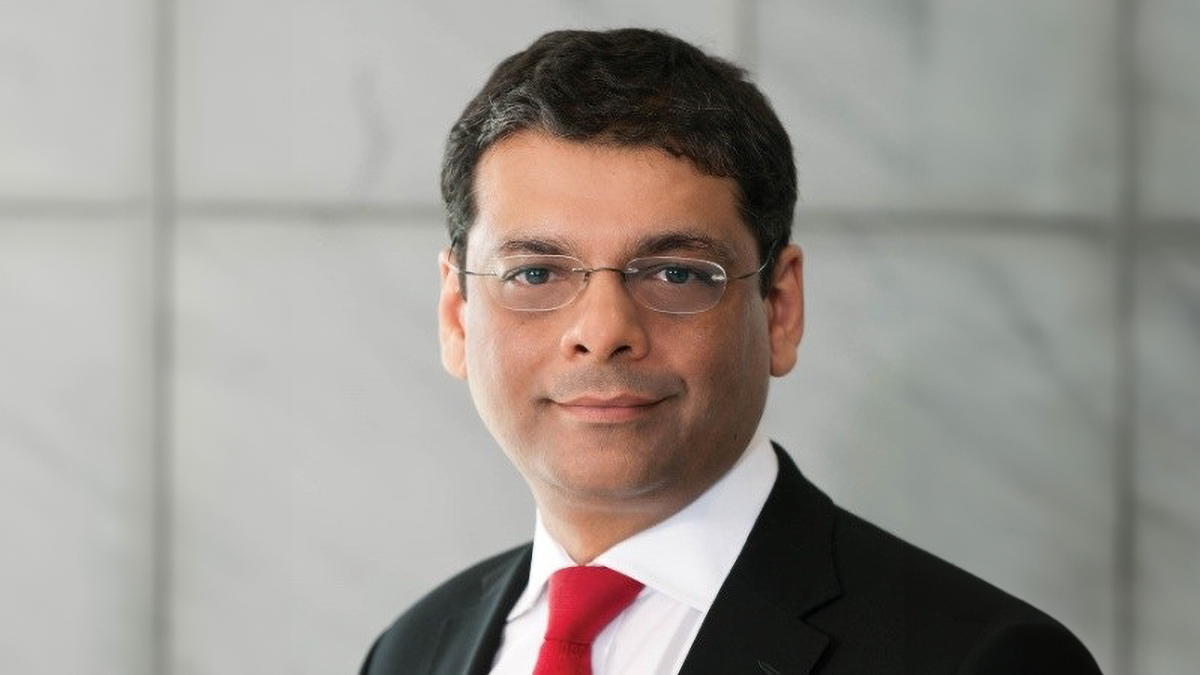
Benjamin Mugisha is chief underwriting officer at African Trade Insurance Agency