The virtues of a virtual captive
HDI’s head of virtual captives describes an innovative approach to simplifying risk

Virtual captives are a tool for structuring risks that conventional insurance finds hard to manage, HDI’s Eric Joly-Pottuz says
The term “virtual captive” appears to be a misnomer, in that it is neither virtual (in the digital sense) nor a captive (an insurance company wholly owned and controlled by its insureds). Instead, as the head of HDI Enablers, Eric Joly-Pottuz, says, it is a tool for structuring risks clients want to partially retain or conventional insurance finds hard to manage.
A virtual captive replicates the main financial benefits of a captive (so they are “virtually” the same) without forming a legal entity (so there is no actual captive). It is a single multi-year insurance contract with optimised period limits and profit sharing that aims to deliver budget certainty and value creation.
“Whenever we conclude a presentation, we like to say there is no captive and there is nothing virtual about it. So, it’s a nice twist at the end to say, the words caught your attention but, in the end, what we are talking about is a good old insurance contract basically pushed to several years out, with profit sharing,” Joly-Pottuz says in an interview with Insurance Day.
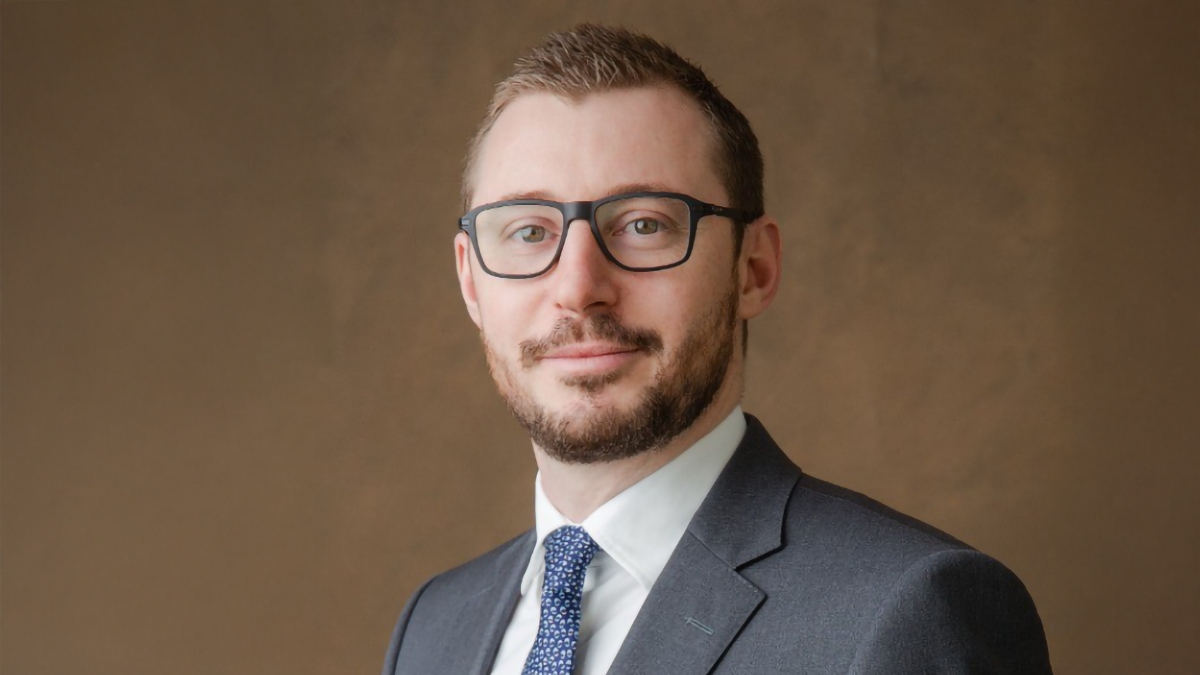 Eric Joly-Pottuz, HDI Enablers
This is innovative as it can take the complexity out of a risk by building a bespoke structure around it. “We keep it simple, with everything known beforehand, so when a partner signs a virtual captive contract with us, they know the duration and the premium budget. This simplicity means they are better able to be flexible,” he says.
Virtual captives, structured reinsurance, affinity alternative risk transfer and parametric programmes are all part of HDI Global’s division dedicated to risk finance, which it calls HDI Enablers.
By risk finance, HDI means structured and parametric re/insurance solutions for corporations and captive owners. “HDI Enablers is also one of our responses to what we may not be able to offer on a conventional basis, so we would look at it on a structured basis. We do this because our mission is to be the partner for the transformation of our clients,” Joly-Pottuz says.
Target first
HDI Enablers always begins with the target, Joly-Pottuz stresses. “Every case starts with an assessment exercise where we discuss the risk with the client. We really listen to them to understand what their targets are because whenever it comes to a structured solution, you have to create a new set of contract features that matches their needs,” he says.
A typical example is a client whose risk has evolved, they have had to push up their retention and they need to find a way to manage that exposure or else risk creating a “shock” in their annual profit-and-loss account, he adds.
HDI Enablers would first understand the strategy underlying the size of the retained risk and then design a solution. “Perhaps you want to cover €5m out of a €7m retention and you’re going to have deductibles of €2m,” Joly-Pottuz says.
“Our virtual captive layer would be placed in between, for the €5m part, and with a duration based on your specific risk profile.”
“All the traditional insurers have reinsurance and captives are themselves insurance companies, so we could say it is as natural for a captive to purchase reinsurance as it is for any traditional insurance company”
Eric Joly-Pottuz
HDI Enablers
A virtual captive can apply to any sector but is particularly useful when a client is changing what is a traditional activity for it to a new one, a process that might distort its risk profile. “A structured approach may be a solution to finding bespoke coverage for this new risk,” Joly-Pottuz says.
“The risk isn’t the same anymore and is part of the company’s transformation strategy. As a reliable partner, we strive to find a solution for them and that could be a structured approach,” he adds.
A virtual captive may be a solution for clients with strong confidence in the quality of their risk and aiming at retaining some of it through profit sharing.
The set-up would be the same for a captive reinsurance contract, whereby a client first takes the given risk within its captive – to incubate a new risk, for example – and then purchases a multi-year reinsurance contract with profit sharing to achieve exactly the same effect.
Joly-Pottuz says this approach also means the captive would be protected in a capital-efficient way – it is not forced to cede 100% of the new incubated risk into its insurance and it could also have a quota-share approach.
Captive audience
Asked how HDI Enablers would present structured solutions to a captive owner, Joly-Pottuz describes use cases.
“If you’ve got specific risks you want to cover, if you’ve got significant retentions, if you’ve got an ambitious loss prevention strategy, you can absorb that within your captive and access structured reinsurance solutions in a way that creates value,” he says.
“For example, your captive could accept the challenge of a complex international programme,” he continues, “and then seek structured reinsurance for it.” The captive thus operates a transformation.
“Captive owners can unlock access to such strategies, even for the most intricated insurance set-ups, thanks to the captive facilitating the transfer and doing the transformation,” he adds.
A second use case is a captive owner wanting to optimise its captive like any insurance company, by purchasing a structured reinsurance policy, meaning multi-year or multi-line.
“The risk appetite the chief financial officer targets can absorb the maximum loss and beyond this threshold or in between two thresholds, it would go for reinsurance,” Joly-Pottuz says. Optimising risk so it matches risk appetite, he continues, enables better management of the volatility of a captive vehicle, creating value.
“All the traditional insurers have reinsurance and captives are themselves insurance companies, so we could say it is as natural for a captive to purchase reinsurance as it is for any traditional insurance company. And the reason why the traditional insurer purchases reinsurance is to steer its risk appetite so it can optimise its capital use,” Joly-Pottuz says.
“A couple of years ago, we started with our core markets in Europe, our historical markets,” he continues, “but we are now able to offer solutions on multiple continents, and our goal is to operate on a global basis.”
Serving clients
HDI Enablers is HDI Global’s division dedicated to the distribution, designing and underwriting of risk finance solutions. As such, it benefits from HDI’s financial strength and can leverage synergies as well as its multiple local capabilities. “We are currently sitting in London and Paris, but we act as one global team,” Joly-Pottuz says.
The ultimate aim of HDI Enablers is customer satisfaction, he stresses. “Whenever we’re able to solve a challenge, be it on a traditional basis or a structured basis, it’s a win for us. The creation of HDI Enablers means we can develop new kind of solutions that not only complement traditional offerings but also create new value streams for the client.”
He concludes: “What matters at the end of the day is HDI Enablers helps unlock innovation for HDI’s clients in a way that protects their risk and project.”